Day 1 → Arrive Kathmandu
An Elevated Trips representative will welcome you at the airport with a traditional silk scarf called ‘Khadak’ and escort you to our 5 star hotel. After completing all the formalities to check-in at the hotel, you can spend the rest of the day on your own to explore or rest.
In case of early arrival, you can go out for the afternoon on a guided sightseeing tour of Kathmandu Valley’s historical and cultural landmarks such as the famous Boudhanath Stupa, the country’s largest Buddhist pilgrim site. As we enter the main gate of the site, the giant white dome with big Buddha eyes will greet us, offering our first taste of Buddhist worship.
After Boudanath Stupa, you will be transferred to the Pashupatinath temple on the Bagmati River’s bank to observe the evening aarti ceremony. The temple is one of the most famous and important temples in the world, serving as the seat of a deity named Shiva. Open cremations of Hindus are done on the banks of the Bagmati River here.
In the evening, you can stroll around the Thamel and Thaity area and discover small temples around every corner and feel the true local flavor of the colorful Kathmandu streets.
Day 2 → Bhaktapur Durbar Square
Today our travels take us to the iconic Bhaktapur Durbar Square. Bhaktapur town lies in the eastern part of the valley of Kathmandu and is the third largest town in the Kathmandu valley. The city is known for its beautiful markets, culture and art. Often known as “Bhadgaon” and known locally as Khwopa, Bhaktapur. King Ananda Dev Malla established the historically and culturally rich town in 889 AD. Bhaktapur’s main attraction is temples, palaces, ponds and historic buildings.
Our full day in Bhaktapur city covers nearly all of the city’s attractions. You will experience the traditional Newari culture, beautiful temples, wood-carved palaces, and spectacular 15th century architecture during your Bhaktapur day tour.
Bhaktapur City’s main attractions include Bhaktapur Durbar Square, Pottery Square, Nyatapola Square, and Dattatreya Square. In addition, unique monastery complexes are to be found throughout the labyrinthine alleyways of the large complex. The most magnificent is the Nyatapola Temple, which is potentially Nepal’s highest temple. This temple has the most exquisite windows in which the frames are carved with decorative, detailed peacocks. Most of Nepal’s art produced in the Middle Ages was based on Hindu and Buddhist cultural traditions and this influence is easily seen in the architecture here. Bhaktapur Durbar Square’s Shiva Temple has the most spectacular wooden Kathmandu valley carvings with a spectacular palace containing 55 unique windows. The view of the Temple of Dattatreya is priceless. Go to the pottery square and learn from local experts how to make clay pots. Bhaktapur is also an excellent place to purchase handicrafts.
After our stunning day out in Bhaktapur Durbar Square we will return to our hotel to clean up and have an amazing local dinner in the Thamel district of Kathmandu.
Day 3 → Boudanath Stupa and Pashupatinath Temple
Today’s journey takes you into the spiritual heart of Nepal. Start the morning at the magnificent Boudhanath Stupa, one of the largest Buddhist stupas in the world and a center of Tibetan Buddhist culture in Nepal. In the afternoon, visit the sacred Pashupatinath Temple, Nepal’s holiest Hindu site, situated along the Bagmati River. Witness traditional cremation rituals and gain deeper insight into Hindu spirituality.
Day 4 → Fly from Kathmandu, Nepal to Paro, Bhutan
After breakfast, your guide will brief you on your trip to Bhutan. Your flight will be with Bhutan’s national airline Druk Air, the only airline in Bhutan. This is the only way to get in and out of this little-seen country. If the weather is clear, you will have wonderful views of the Himalayas during your flight.
On arrival to Paro you will be received by our representative, the tour guide, and driven to the hotel. After a delicoius local lunch, we continue to to Paro valley for sightseeing and cultural engagement.
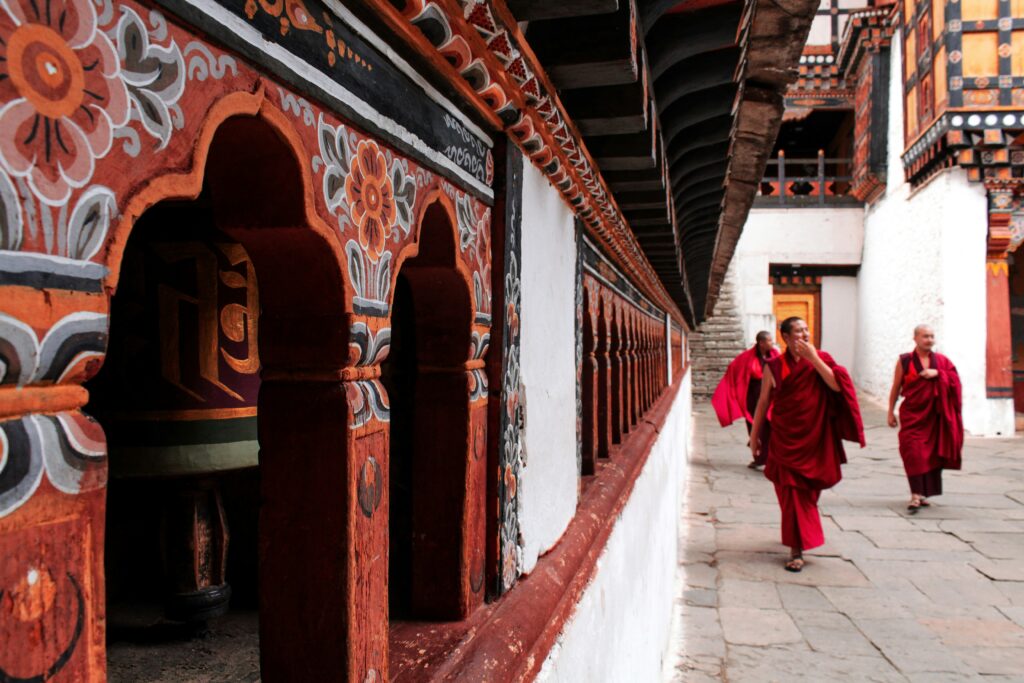
First we will visit a cultural icon of Bhutan, the Bhutanese National Museum (aka “TaDzong”) overlooking the Paro Valley. This unique round structure was once the watch tower guarding the Rinpung Dzong. It was converted into a National Museum in 1968 and has held some of Bhutan’s greatest national treasures since that time. The National Museum makes for a great introduction into the rich history of Buddhism that will help us lay a a foundation for our experiences later in the tour.
Then we move onto the renowned Paro Dzong (“Dzong” means fortress). This Dzong is the seat of the district administration as well as the home for the monastic school. The central tower or Utse of the Dzong, with its superb woodwork, is one of the most beautiful in the country. The Dzong was built in 1645.
Day 5 → Thimpu
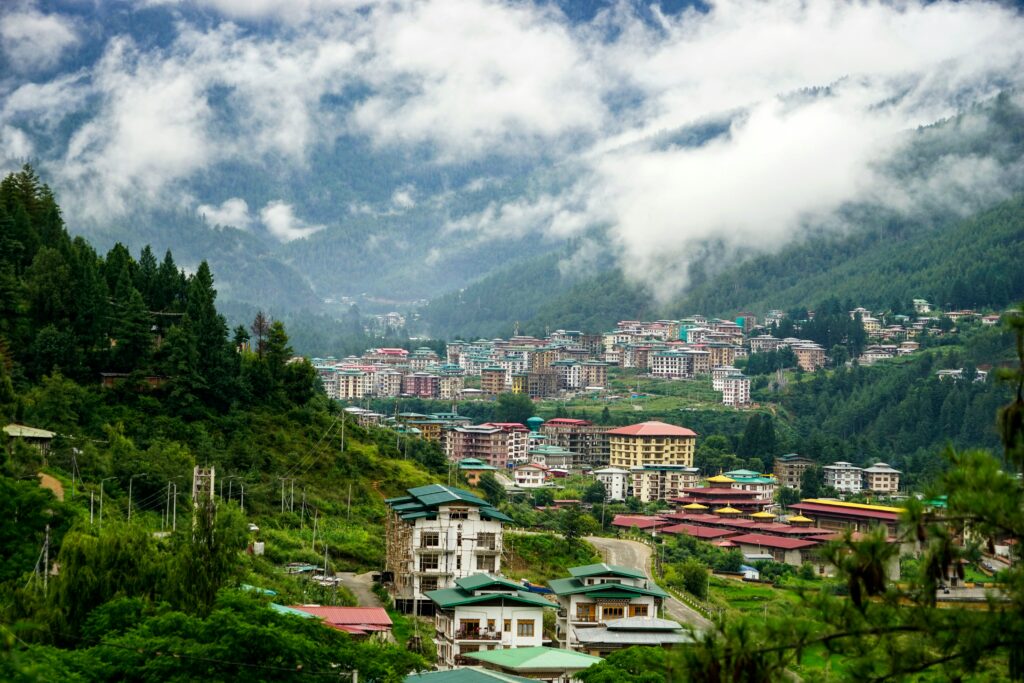
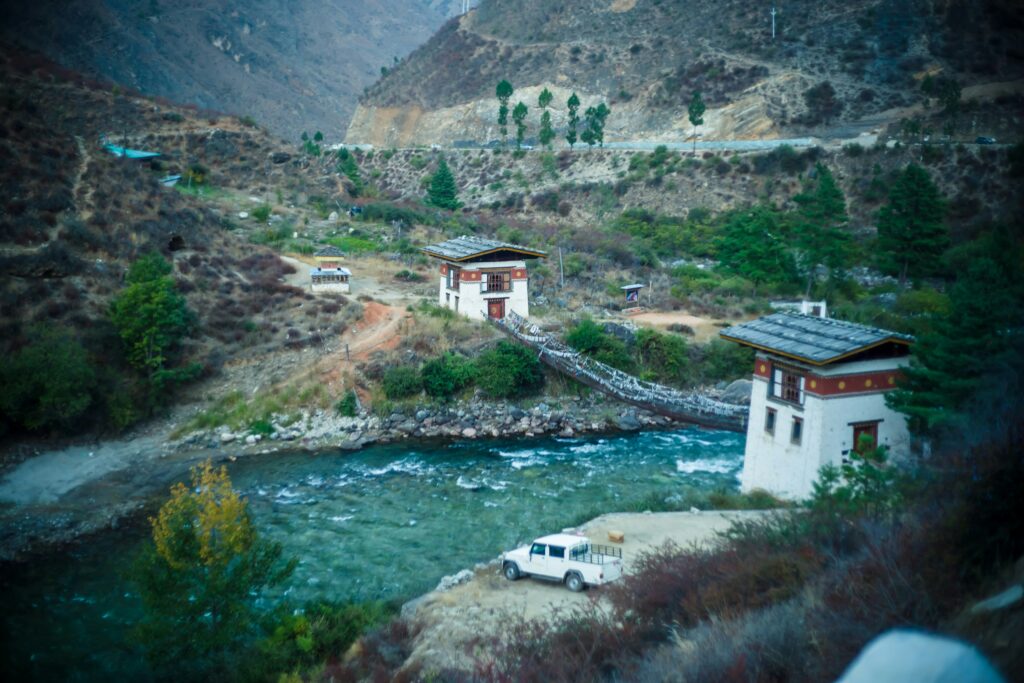
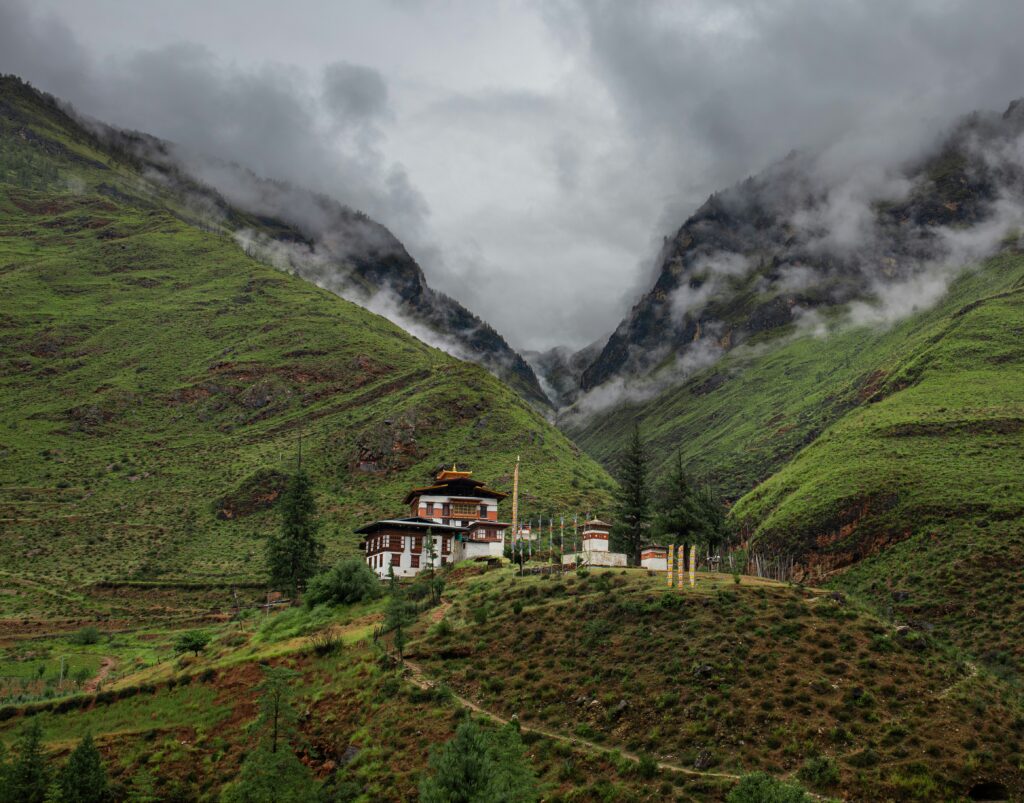
Rise early, pack your bags and drive about one hour up a switchback road to Chele La Pass at 12,401 ft (3,780m) for one off Bhutan’s best views of the snow-capped western range of the Himalayas. A hot breakfast picnic will be served at the pass. After breakfast we drive two hours to Thimphu (7,600 ft / 2,320 m). In Thimpu we will visit Tamcho Lhakhang, a 15th century ancient iron bridge set against a dramatically rushing river and a primeval forest. From here we will then visit Doobje Dzong, one of the oldest fortresses in Bhutan which now houses the national Buddhist Monastic School . Here we will also drink special medicinal holy water that comes from a sacred spring located high in the mountains.
Lunch will be at the local monastery filled with chanting and reverent monks. In the afternoon we will do some sightseeing to experience the craftmanship and arts of Bhutan around Thimpu including viewing the the Buddha Place, The Thimpu Textile Museum and Paper factory, the National Institute of Traditional Medicine, and the Paradise Temple and Memorial Chorten.
Day 6 → Tango Monastery
After breakfast visit Choki arts and Crafts school and explore the living museum. Then today’s journey will take us to Tango Monastery and a special day hike above the monastery complex. Tango Monastery was built in the 16th century and now houses the Buddhist University of Bhutan. Picnic lunch at the Chri bridge riverside overlooking a glacier fed river and the beautiful conifers along the river. After lunch return to Thimpu town to explore this quaint town and the local market.
Day 7 → Punakha
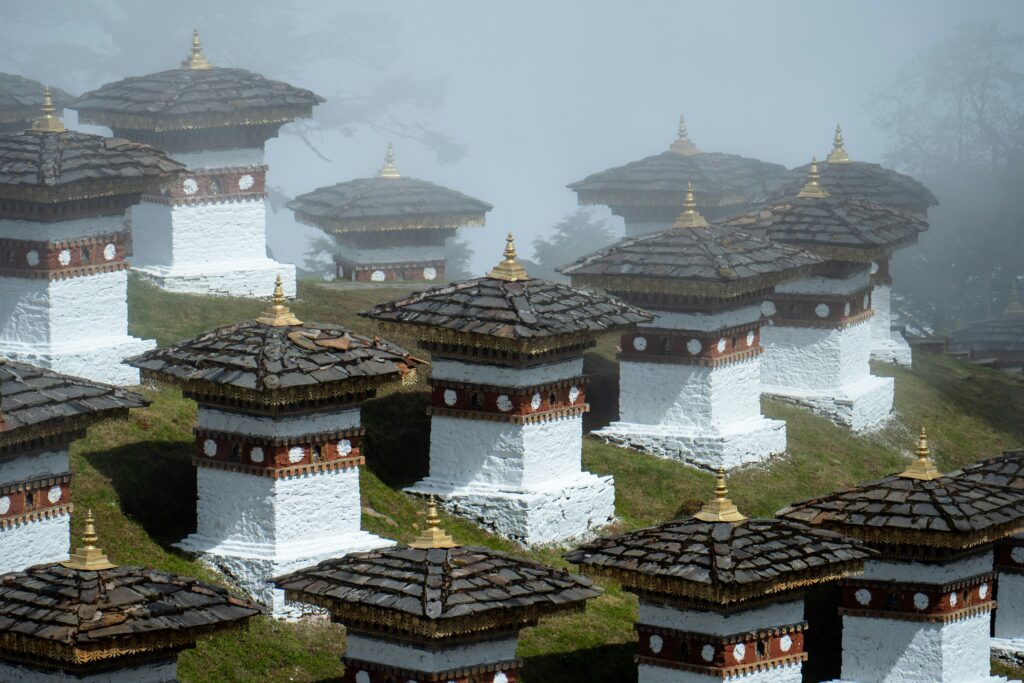
Today we start our unforgettable journey to Punakha. Breakfast at 8 a.m., then pack and meet your guide and driver in front of the hotel at 9 a.m. We then begin our journey to the east, en route stopping at 10,500 ft. at the DochuLa pass for tea and biscuits and enjoy the view of the eastern Himalayan mountains. Here we can spend some time photographing the 108 Druk Wangyal Chortens. Built in 2004 to “celebrate the stability and progress that His Majesty has brought to the nation,” this hill of 108 white stone Buddhist monuments stands quietly in the middle of the foggy pass and reflects Bhutan’s spiritual and artistic traditions.
Drive down from the high pass to Punakha through villages and farmland stopping for panoramic photos along the way.
From the chortens we will visit Chimi Lhakhang, the temple dedicated to the 15th century iconoclast and patron saint of fertility, Lam Drukpa Kinley, also fondly remembered as the “Divine Madman”. Here we can view the rows of shops that sell thousands of hand carved phalluses to commemorate the Divine Madman’s victory over evil spirits in this location. Devout local Bhutanese women have been coming to this very location to pray over problems of infertility for hundreds of years.
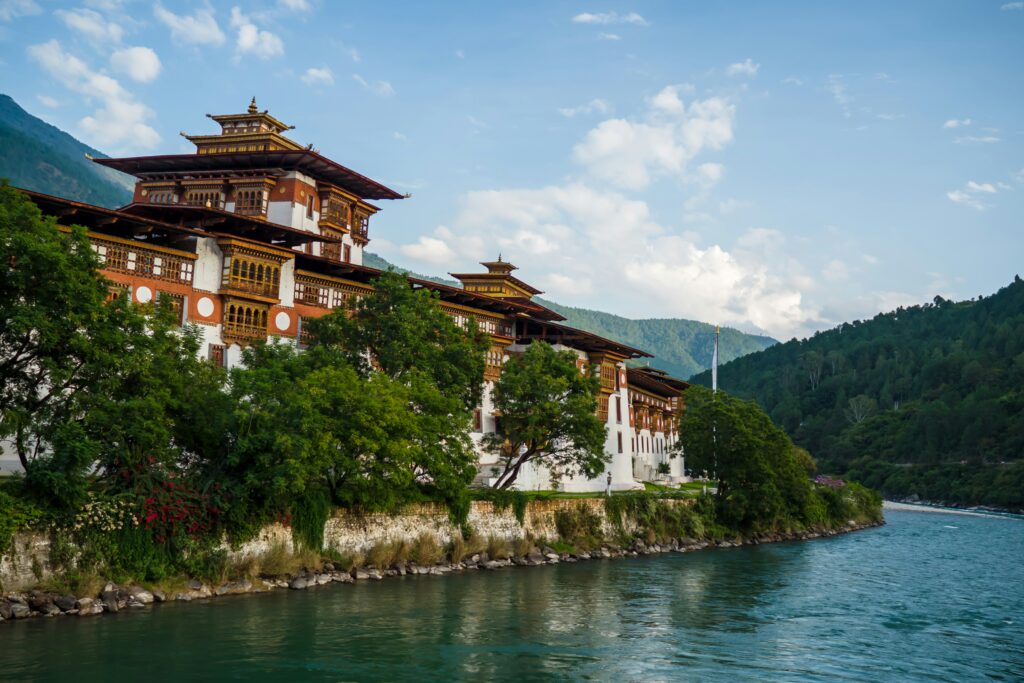
After lunch we will visit Punakha Dzong where we can photograph the colorful exterior, newly covered foot bridge, and interior courtyards with colorful and intricately painted doorways and temple exteriors. Built in 1637 between the confluence of the Po Chu (male river) and Mo Chu (female river) this fortress monastery is the winter residence of Bhutan’s spiritual leader, the Je Khenpo or Head Abbot, and the central monastic body, which comprises 350 monks in total.
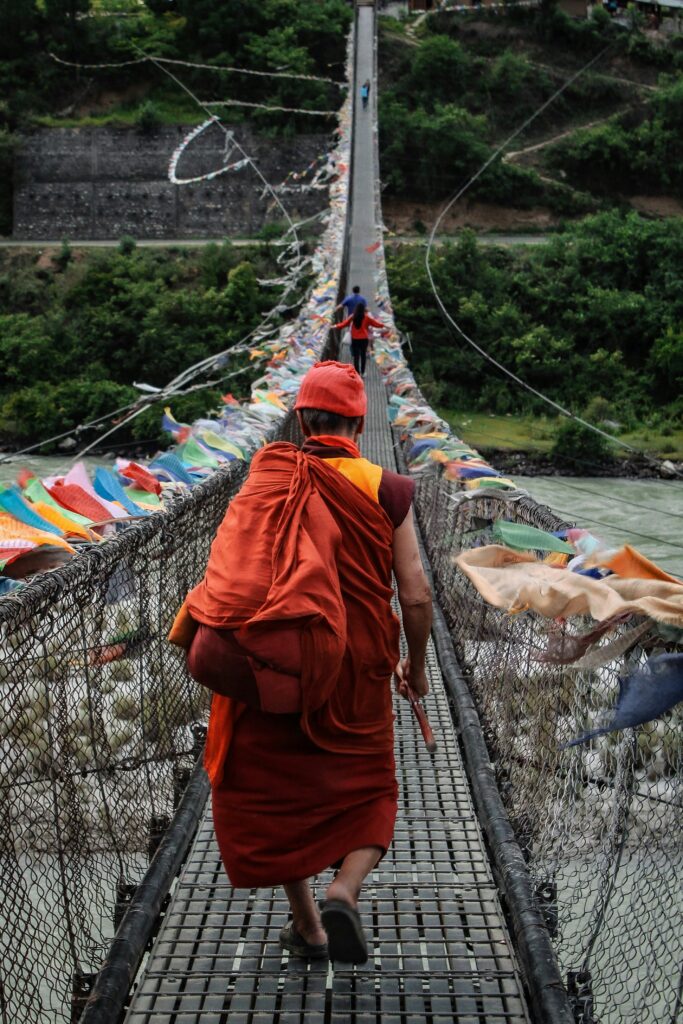
From the Punakha Dzong we will visit a unique hanging suspension bridge which is the longest suspension bridge in Bhutan and has a breathtaking view 50 meters over the rushing river below.
Overnight in Punakha.
Day 8 → Gasa Festival
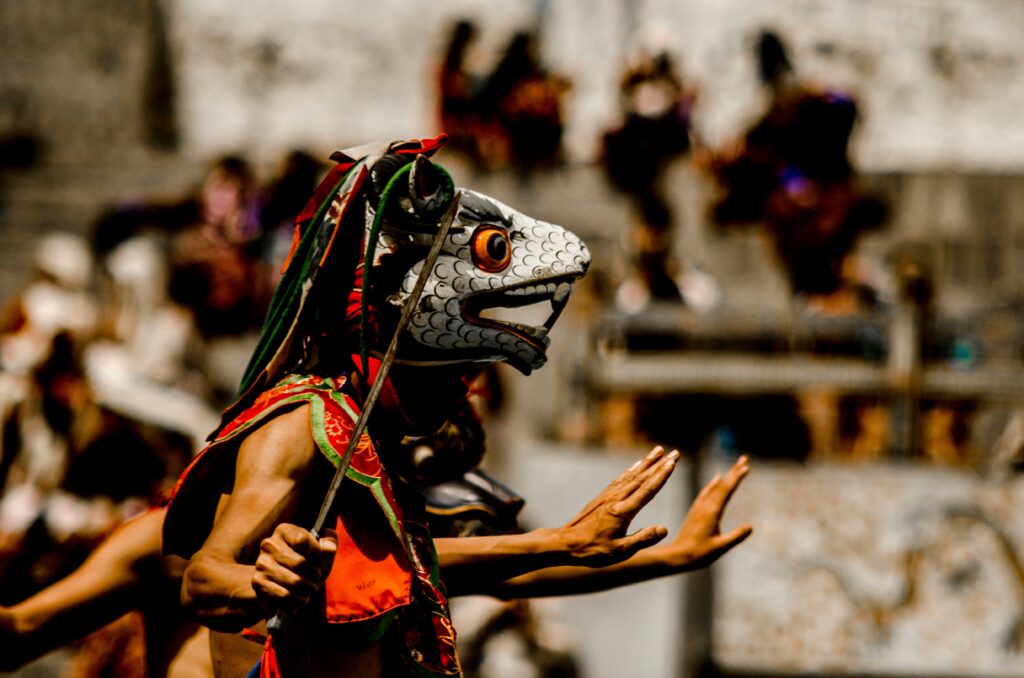
After an early breakfast drive to Gasa through the lush forests of Jigme Dorji National Park as we ascend up into the Highlander District to attend the Gasa festival. This very unique festival has very few foreigners that attend and will definitely be a highlight of our photography tour as it will provide a unique glimpse into the traditions, music, and mask dances that only very local monks get to experience. Held inside the Gasa Dzong, this festival will be attended by many great lamas and the mountain herders who still wear their traditional dress and drive yaks in the remote hils of Bhutan. This drive is about 3 hours and is itself a great opportunity to photograph the Bhutanese people in their natural element. We finish our full day at the festival with an evening soak in the Gasa hot springs and then return to Jungle Lodge. Gasa is one of the most remote points of our journey and as such the lodging can be more rustic compared to that of Thimpu or Paro.
Day 9 → Nature Hike and River Rafting in Punakha Valley
After breakfast Drive to Punakha.
From Punkha we will hike to Khamsum Yully Namgyel temple. This leisurely stroll is easy and takes only about 45 minutes to 1 hour to complete as we wander through the verdant Punakha valley. Breath the fresh air as you lazily walk through rice paddies, pine forests, and over a suspension bridge, offering stunning views of the Punakha Valley.
In the afternoon, we will continue to experience the rich natural wonders of Bhutan as we experience river rafting in Punakha.
Day 10 → Phobjekha
Drive to Talo village to attend our second festival of the tour. The Talo festival is held in front of Talo Monastery governed under the Punakha District. Many villagers attend the festival as the festival is a significant event showcasing age old traditions for the People of Talo.
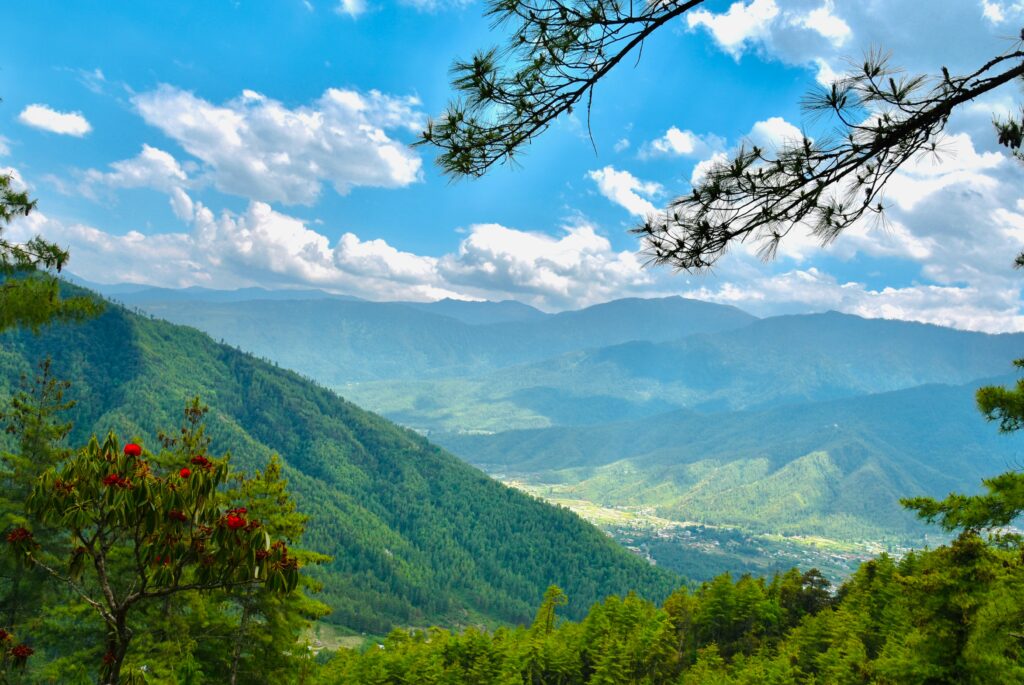
After lunch we will drive to Phobjekha, the valley known for being the winter roosting grounds of the legendary black neck cranes that fly in from Tibet and Siberia. The cranes will have already left the valley but it is a beautiful and authentic place to connect with nature and the quient, quaint village farmhouses that surround this valley. The drive follows the national highway to Nobding and just before Pelela Pass we will turn onto a “farm road” and drive another 13-km to Phobjekha, crossing over Gangtey Pass at 3,140 m,/ 10,300 ft. before dropping into the Phobjekha Valley. It is a beautiful pass that is surrounded with blooming Rhododendron at this time of year. Here we will stop at the pass to photograph the local Bhutanese craftsmen selling products made of yak and sheep wool as well as local medicinal herbs. Also, it is likely that we will see herds of yaks and their herders as they work their way higher into to highland summer pastures.
Phobjekha is a glacial valley on the periphery of the northwestern tip of the Black Mountain National Park. The valley is a conservation area and lies on the northern boundary of the Jowo Durshing range. People sometimes refer to the entire region as Gangtey after the name of the Gangtey Temple that is situated on a ridge overlooking the Phobjekha valley.
Day 11 → Wangdi
After breakfast drive back to Paro via to Wangduephodrang — affectionately called “Wangdi” by the locals — where the most prominent feature is the Wangdi Dzong sitting on a mountain spur commanding an archer’s view of two connecting rivers.
Lunch on the way and visit a special Buddhist nunnery on the drive back. Overnight in Paro where we will prepare to hike Tiger’s Nest Monastery on the last and final day.
Day 12 → Tiger's Nest Monastery
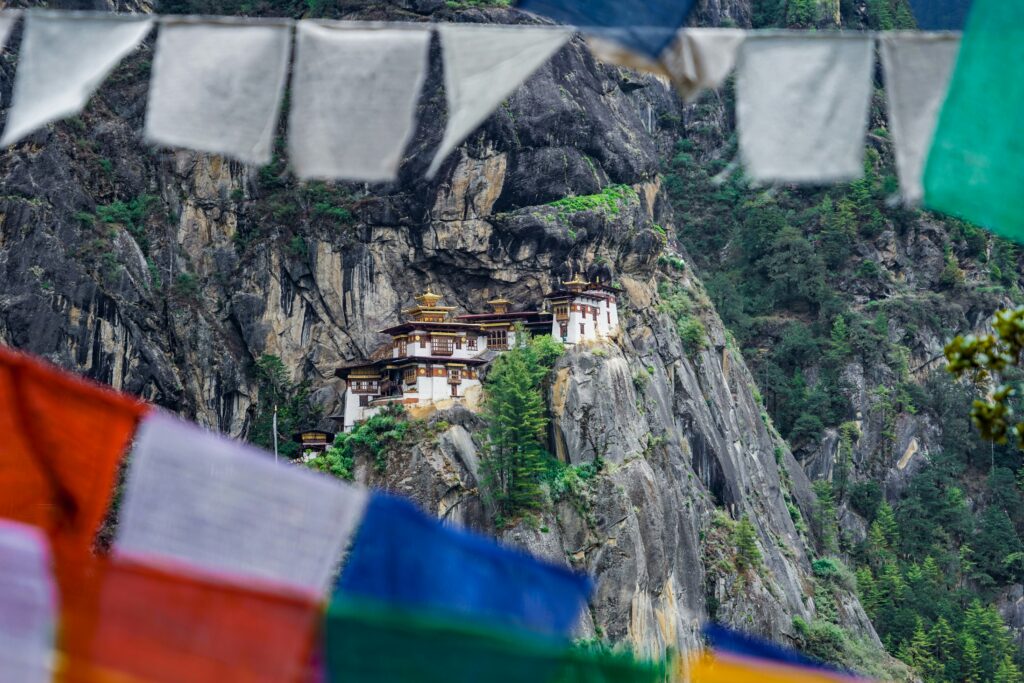
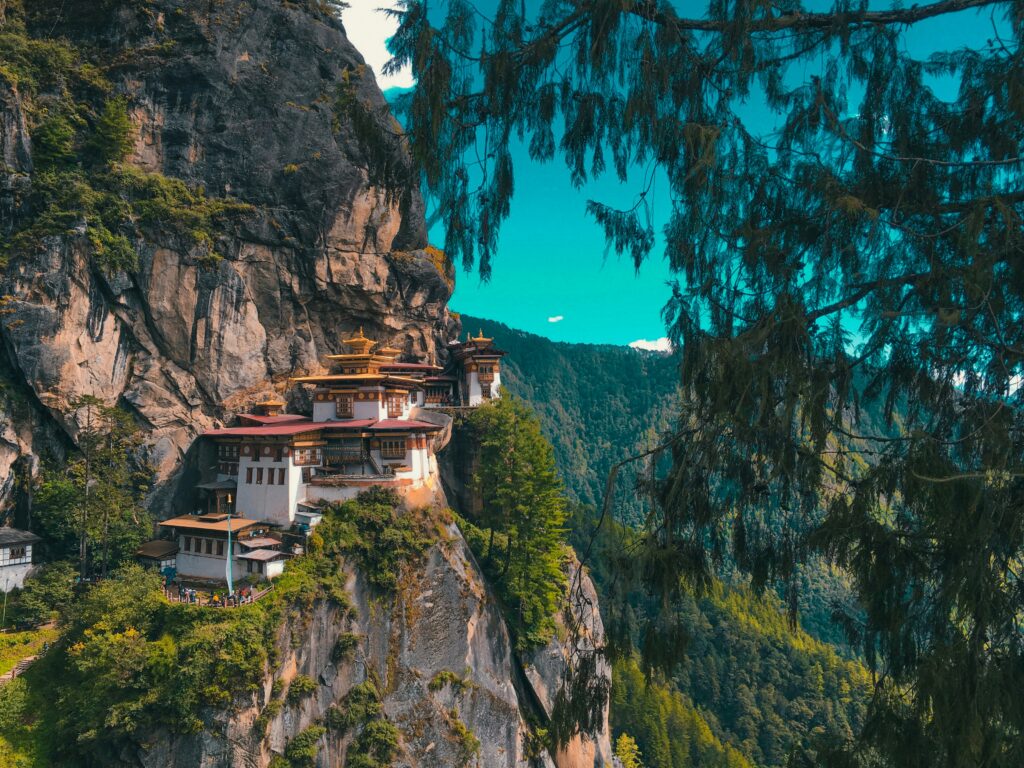
Early morning hike to Tiger’s Nest Temple (altitude: 3,120m). This stunning hike will take about 5 hours round trip. Tiger’s Nest is located on a majestic rocky cliff which hangs 700 meters vertically above the valley floor. This gives it an incredible vantage point looking over the valley as you approach the monastery over the last 1km of the hike.
This monastery is a revered pilgrimage site and a major tourist attraction, known for its breathtaking views and its connection to Guru Rinpoche. The trail of beautiful rhodedendrons is covered by an assortment of prayer flags and you can enjoy one of the most beautiful views of Paro Valley as you go higher into the cliffs where Guru Rinpoche once defeated the evil spirits.
In the evening we will finish off our journey together as we relax and enjoy a local hot stone bath and conclude with a farewell dinner in Paro.
Day 13 → Depart Paro, Bhutan
Drop to Paro, Bhutan airport for departure. Tour officially ends.