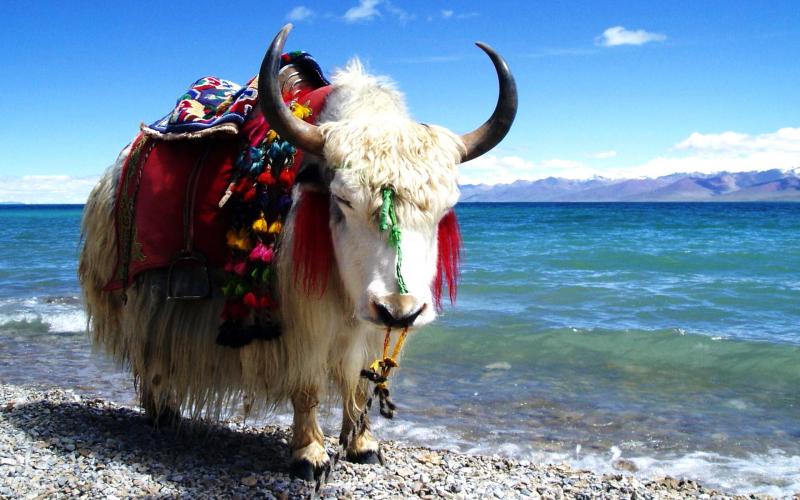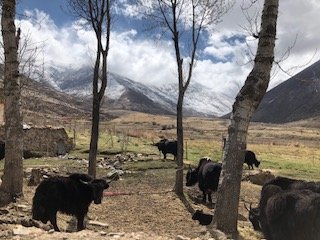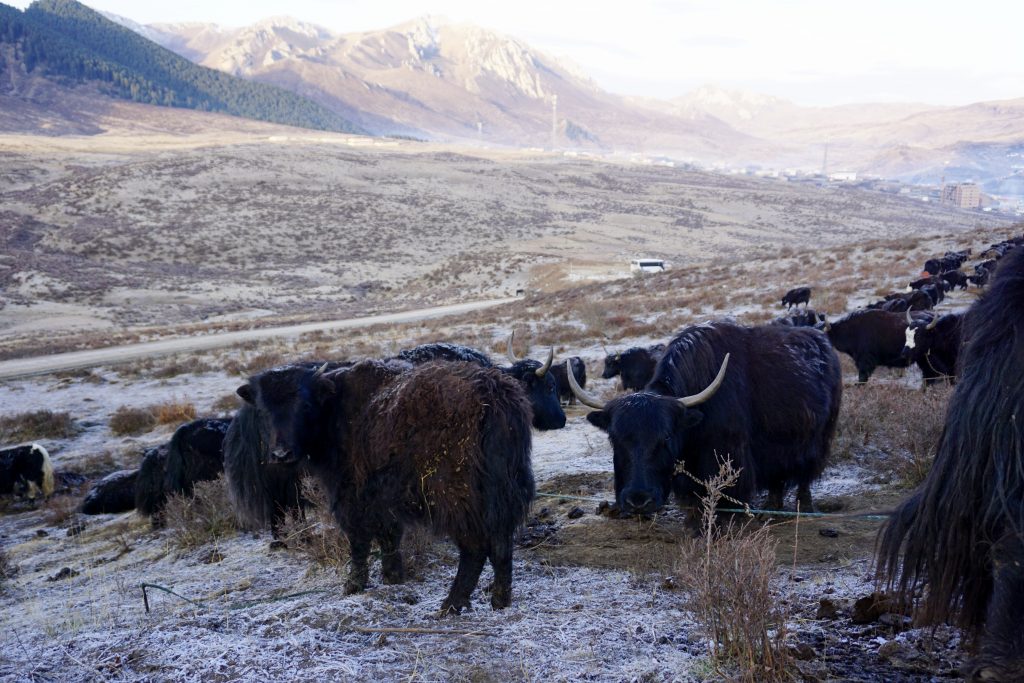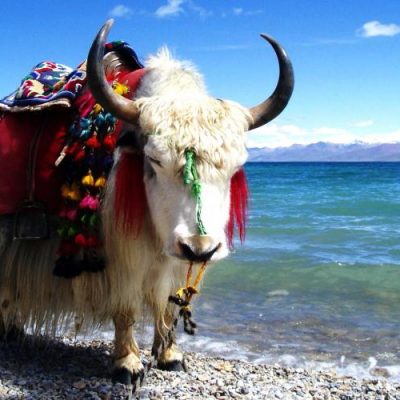
The yak (འབྲོང་། ) is a staple of Tibetan nomad life, with the traditions and rhythms of almost all Himalayan people revolving around this curious beast and its never ending quest to find more grass. Yaks produce essentials that almost every Tibetan nomad family uses in the form of clothing, shelter, cooking fuel, and meat and milk for their family. And before the age of motorcycles and cars, yaks were a main form of transportation, especially as they were both more stable and adept at crossing high, rocky mountain passes with heavy loads than the horse. For many families yaks are the sum total of all their possessions, their inheritance, their investments and savings, and – what we would call today – their “net worth”. Nomads may live in simple tents with dirt floors and few amenities but for a herder with an average herd size of 100 yaks those yaks may hold a total value of around $80,000 USD (given that each full grown yak may sell for between $700 to $1100 USD per head). The economic and cultural importance of this animal can not be underestimated.
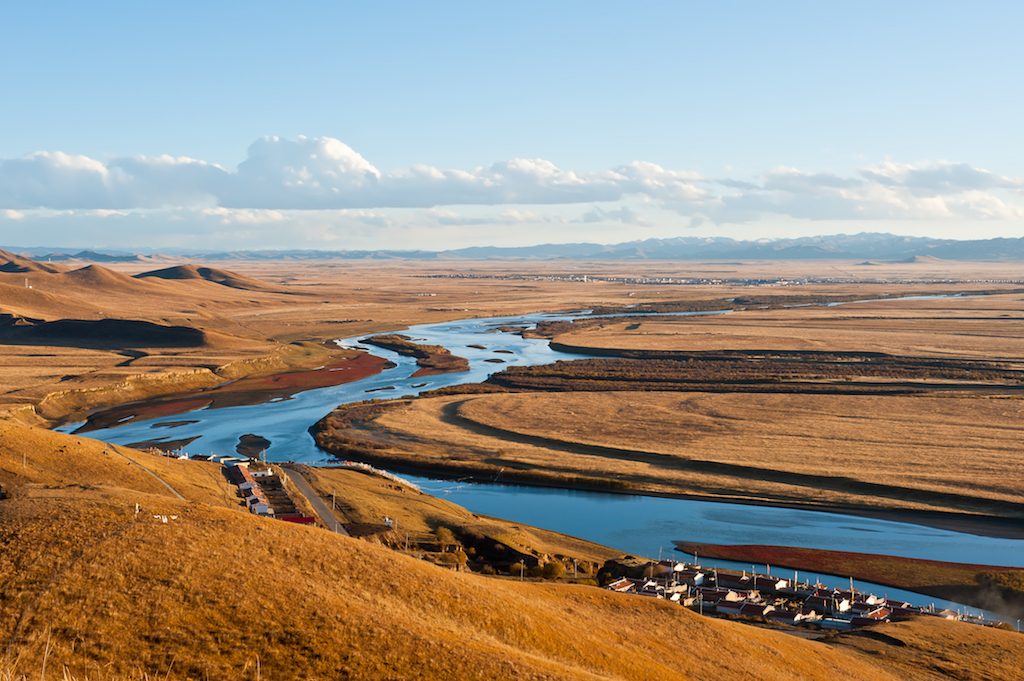
In this tour we will travel to remote grasslands communities to understand the rhythms of the Amdo Tibetan people as they migrate with this important animal and its particular grazing patterns. More than just a tour about a grunting yak, this is a glimpse into one of the last nomadic civilizations on earth and the brave and creative people who have survived for hundreds of years on the highest plateau on earth.