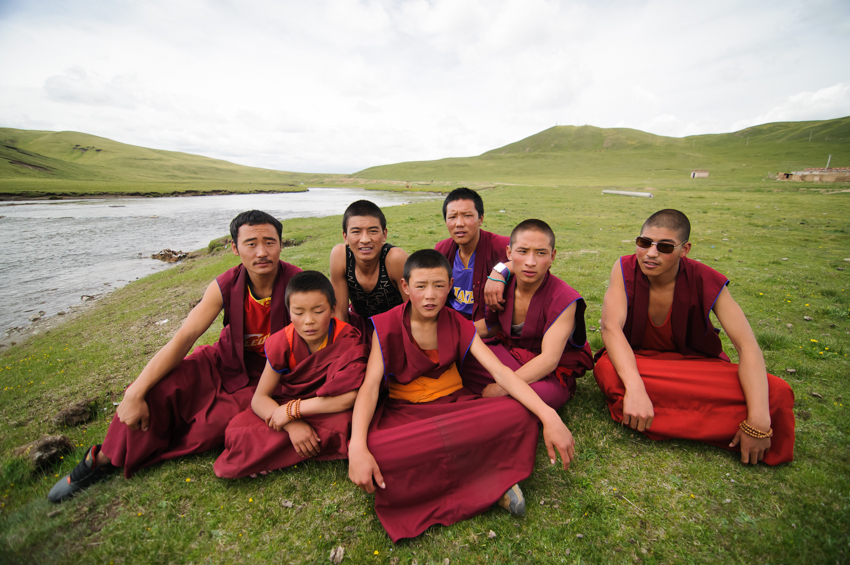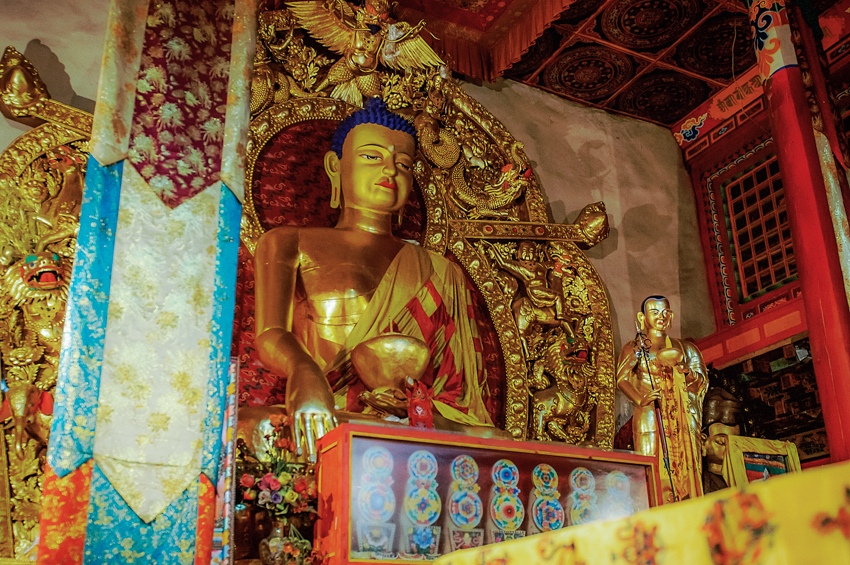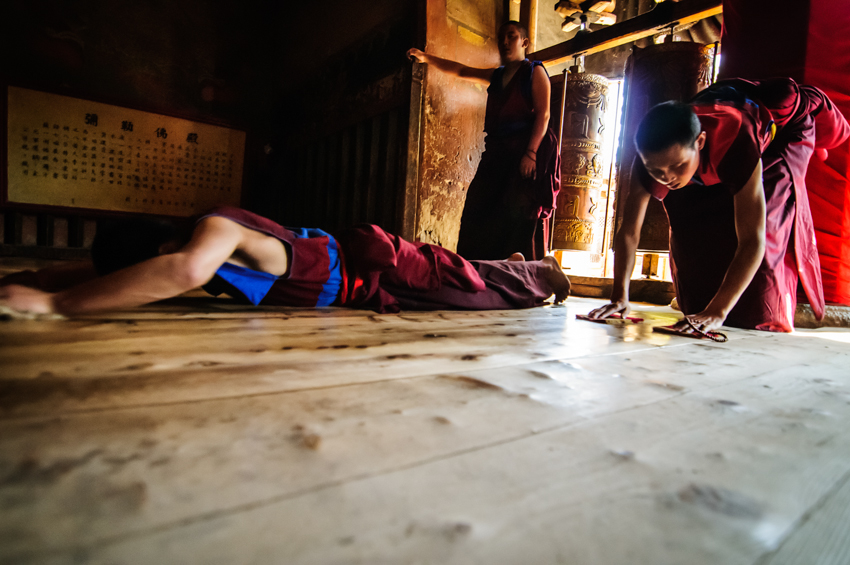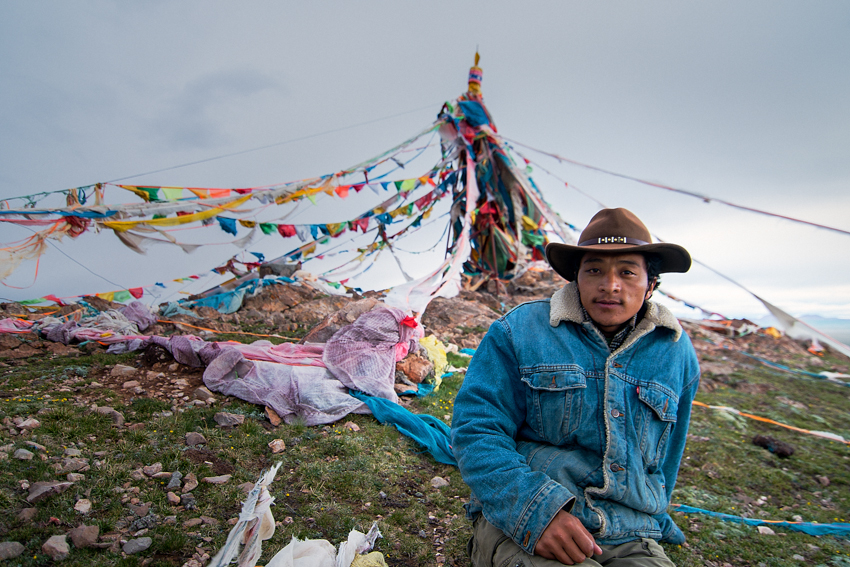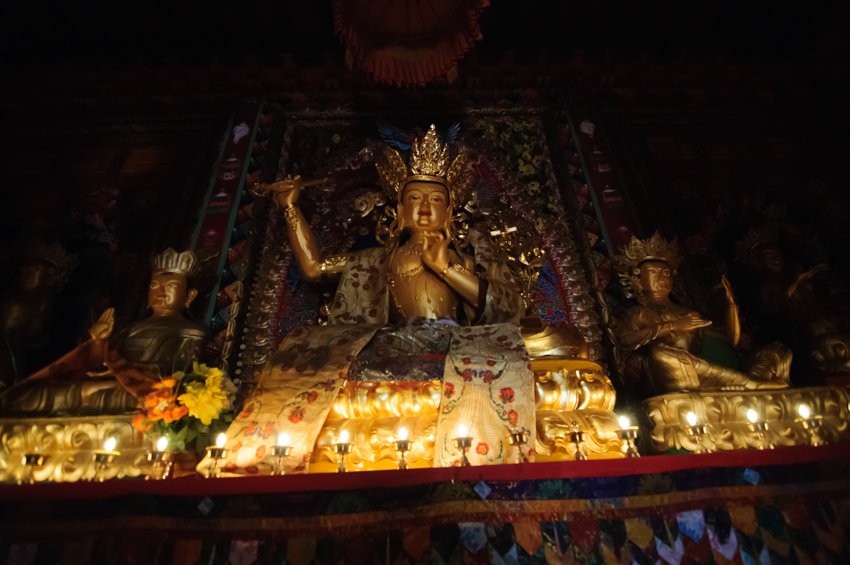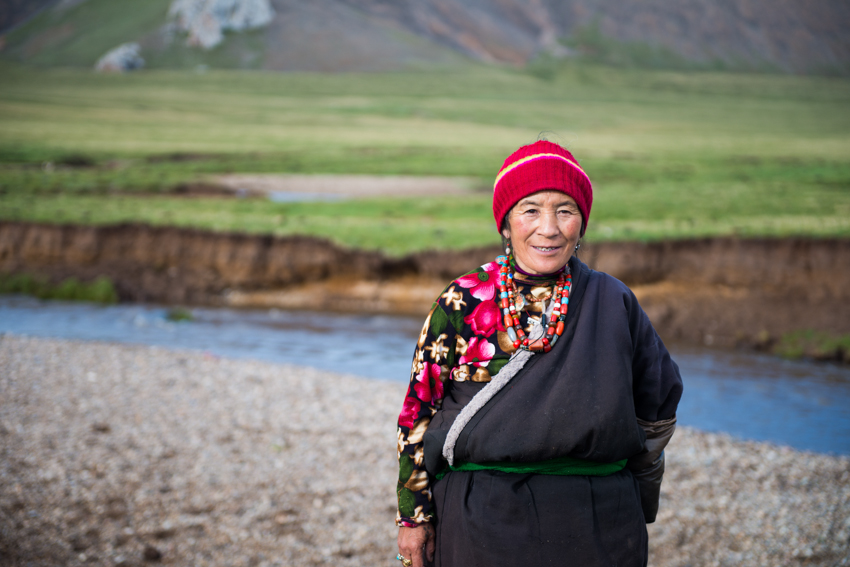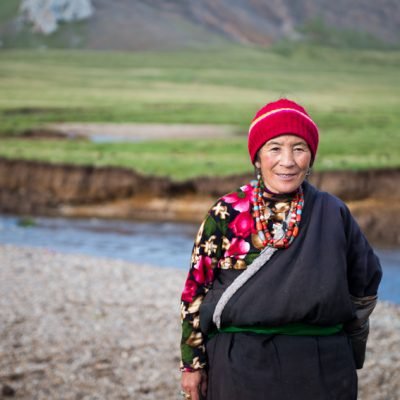
Rebkong sits on the edge of the Tibetan plateau in a region historically known to its nomadic inhabitants as Amdo and is now very accessible via a 2.5 hour drive due to the recent construction of the elevated highway from Xining. The town’s origins stretch back several hundred years when it emerged around the establishment of the Longwu Monastery.
Rebkong’s elevation is 2,600 meters (8,530 feet) and is surrounded by several mountains and large expanses of nomadic pastureland. Rebkong is famous for it’s Tibetan traditional arts and cultural preservation, especially the Amdo Rebkong Monlam Festival in winter and the Rebkong Shaman Festival in summer. These are the two of the largest festivals in the Amdo Tibet region and the colorful dances and ceremonies give the viewer an intense insight into the deep spirituality of Tibetan Buddhism. The Rebkong Shaman Festival is an important religious ceremony where local nomads join in a circle ritual dance around one man, whose cheeks are pierced through with long needles, who shakes and dances uncontrollably under the powerful possession of spirit. This possessed man serves as an oracle or spiritual medium for the local mountain god. The spectacle runs to a rhythm of drummers pounding drums around the jerky, wild movements of the crazed oracle.
There are several monasteries and villages around the main hub of the central town which are home to hundreds of professional artists – many of these teenagers with the steady hands and excellent eye sight that lend well to the detailed skill of Thangka painting. The most well known areas that produce these traditional Thangka paintings are those around the monasteries of Upper and Lower Wutun.
These sleepy, humble villages are, surprisingly, the center of Buddhist art all across Tibet. It would not be uncommon to visit monasteries in any area of Tibet and to find that most of the Thangka paintings in those remote monasteries came from this area.