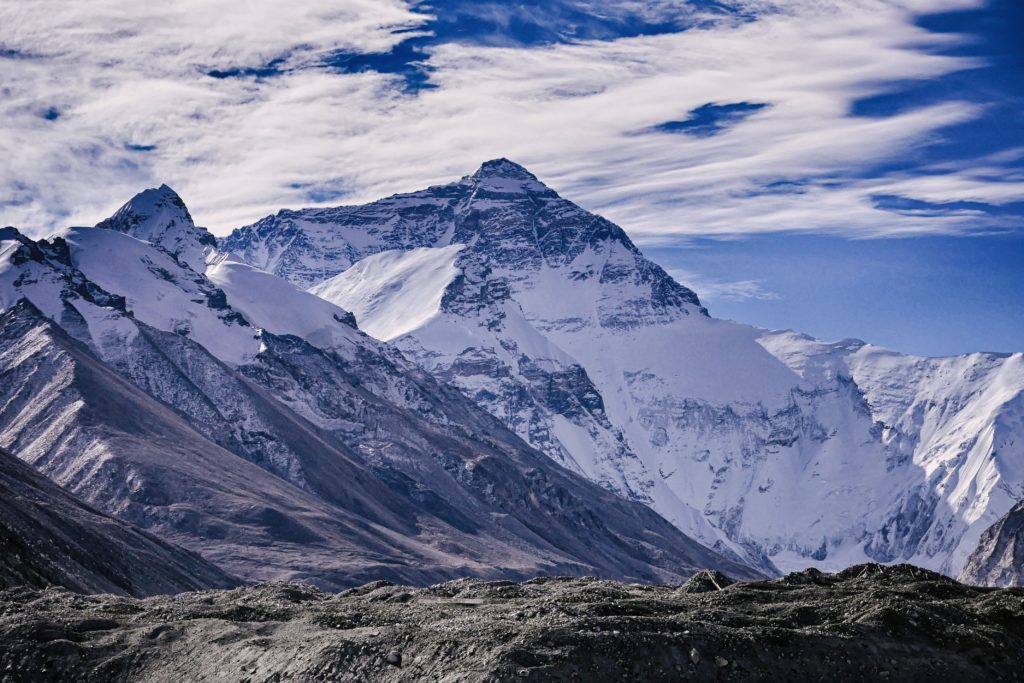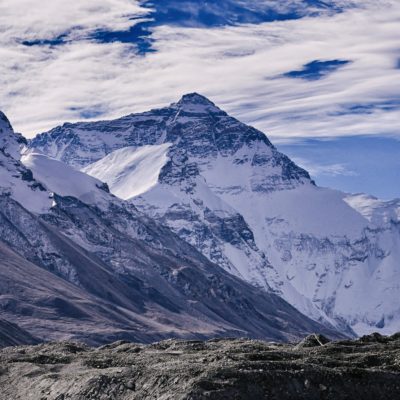
Everest base camp refers generally to two base camps on opposite sides of Mount Everest: South Base Camp is in Nepal at an altitude of 5,364 metres (17,598 ft) (28°0′26″N 86°51′34″E), while North Base Camp is in Tibet, China at 5,150 metres (16,900 ft) (28°8′29″N 86°51′5″E).
The base camps are rudimentary campsites on Mount Everest that are used by mountain climbers during their ascent and descent; they are also visited by tourists. South Base Camp is used when climbing via the southeast ridge, while North Base Camp is used when climbing via the northeast ridge.
Supplies are shipped to the South Base Camp by porters (Kulli), and with the help of animals, usually yaks. The North Base Camp is accessed by a paved road that branches from China National Highway 318. Climbers typically rest at base camp for several days for acclimatization, to reduce the risks and severity of altitude sickness.
Now I know the reality: there are many “Everest Base Camps” for the real mountaineers and they make their way slowly up the mountain, acclimatizing at various base camps along the way. The EBC that visitors go to is simply that: a visitor’s EBC. You can see the high-tech gear of the real trekkers from afar but you’re not allowed to mingle. That said, you still reach an altitude of 5,200m (~17,000feet), so it’s nothing to be ashamed of on that end. Additionally, you have incredible views of Everest, even from the rocks behind which you relieve yourself in the morning. I’ve never had a more amazing view from my “bathroom” window.
A visit to the North Base Camp currently requires a permit from the Chinese government, on top of the permit required to visit Tibet itself. Such permits must be arranged via travel companies in Lhasa as part of a package tour that include hiring a vehicle, driver, and guide. The North Base Camp is accessed by vehicle through a 100 km road branching to the South from the Friendship Highway near Shelkar. From the Base Camp, all tourists must take the buses managed by the government to limit the traffic in the last stretch of gravel road to a marked hill at 5,200 meters above sea level just before the climbers’ camp. It is also possible to trek up from the tourist camp, but only when properly acclimatized. The “tourist Base Camp” is located about halfway between Rongbuk Monastery; the actual climbers’ Base Camp is at the foot of Rongbuk glacier.