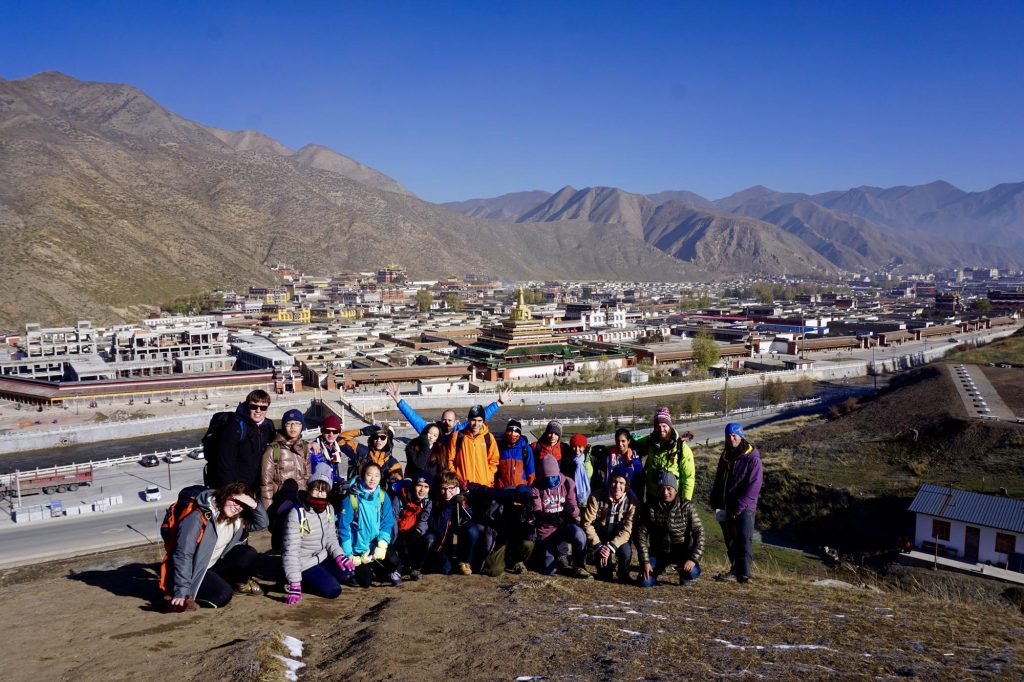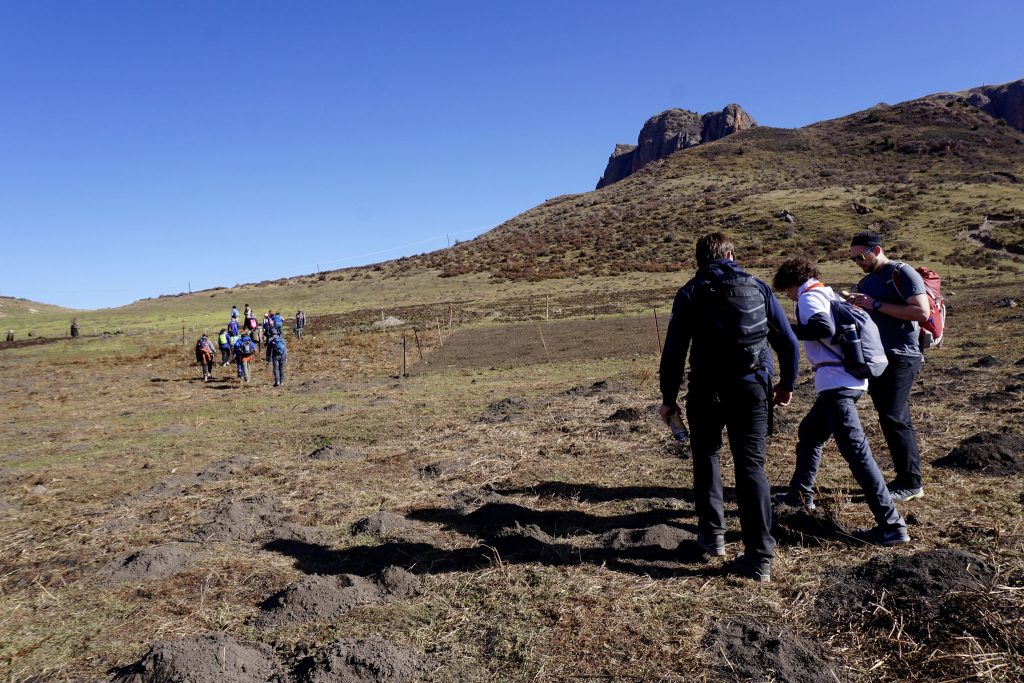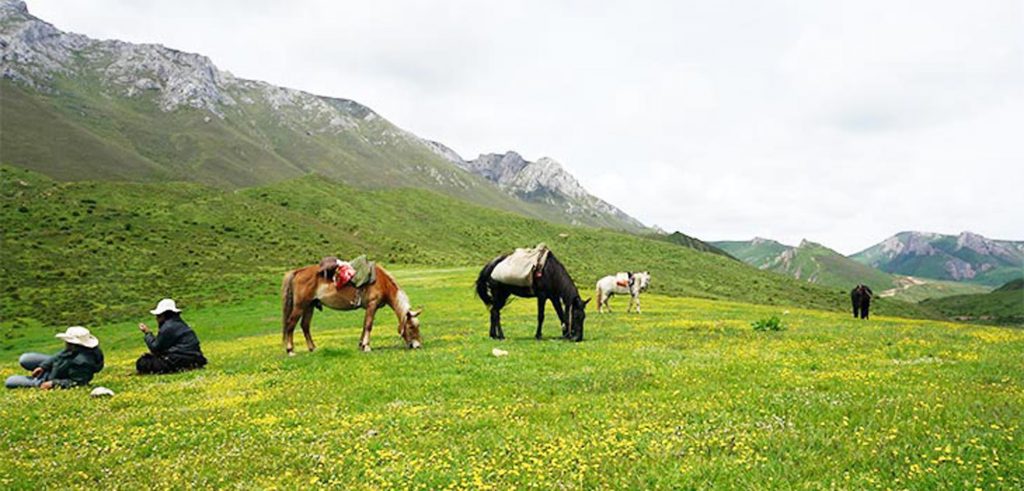
Travel south from Lanzhou to Gansu’s largest Gelugpa monastery to Labrang Monastery in Xiahe town. Then venture out into the best hiking Gansu has to offer in incredible open grasslands of Langmusi, and into the “Rock Box” canyon of Zhagana. This wild country combines some of our favorite hikes in all of western China and will be a nature-lover’s delight!
Here is a look at some of the very special locations on this trip as you trek through Gansu…
Lanzhou
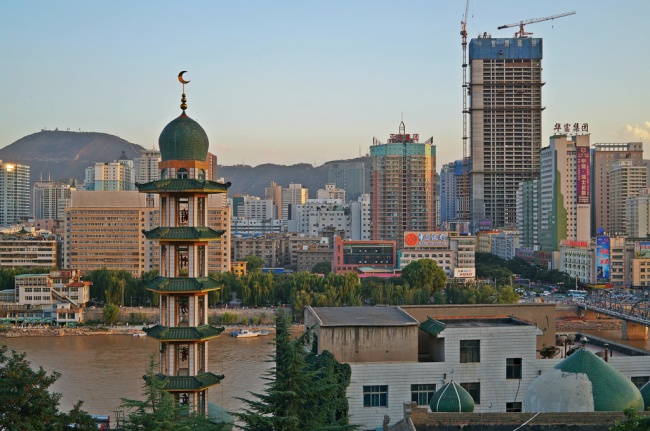
Our exciting hiking itinerary starts in Lanzhou, the capital of Gansu Province with over 4 million residents. Lanzhou is the start of many of the Silk Road journeys through China. But if you turn south, rather than west, it is also the gateway into Amdo Tibet and high grasslands and rocky mountains.
Bingling Monastery and Cave Grottoes
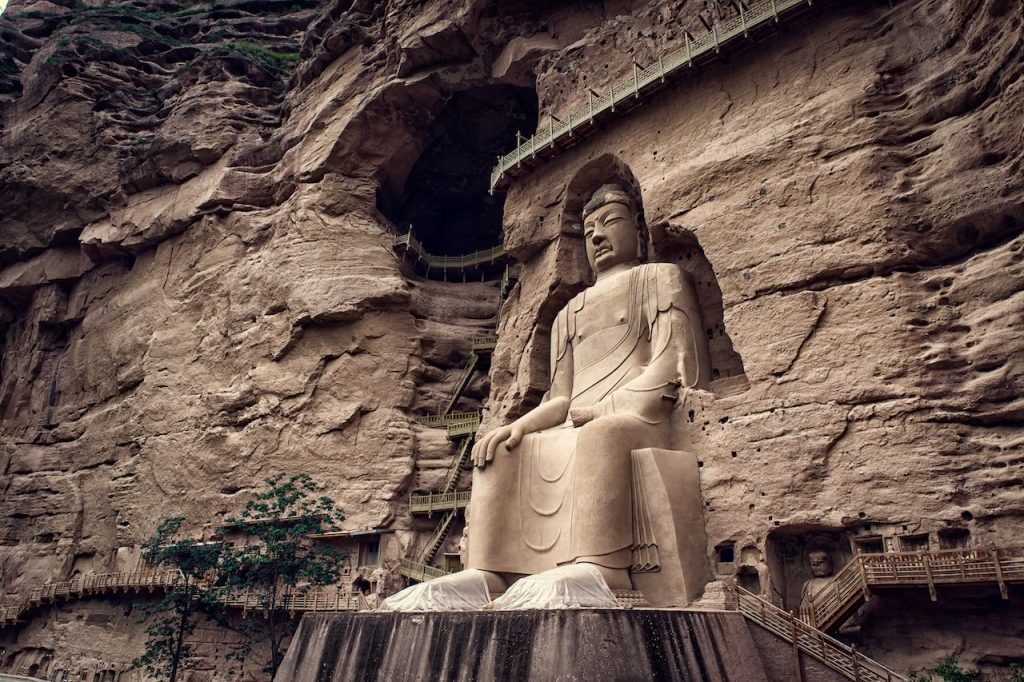
From Labrang we will make our way to the the Bingling Temple. The Bingling Temple (simplified Chinese: 炳灵寺; pinyin: Bǐnglíng Sì) is a series of grottoes filled with Buddhist sculptures carved into natural caves and caverns in a canyon along the Yellow River. In fact, we will start and finish our visit to the grottoes on an awesome boat ride across this vast and scenic reservoir. It lies just north of where the Yellow River empties into the Liujiaxia Reservoir (劉家峽水庫; Liújiāxiá Shuǐkù). Administratively, the site is in Yongjing County of Linxia Hui Autonomous Prefecture in Gansu province, about 100 km (62 mi) southeast of Lanzhou.
With a 1.5 hour drive from Lanzhou, the capital of Gansu, this is a very accessible day trip from Lanzhou. While this is not exactly trekking in Gansu, this is a not to be missed site of incredible historical and artistic importance.
The Bingling Caves were a work in progress for more than a millennium. The first grotto was begun around 420 AD at the end of the Western Qin kingdom. Work continued and more grottoes were added during the Wei, Sui, Tang, Song, Yuan, Ming, and Qing dynasties. The style of each grotto can easily be connected to the typical artwork from its corresponding dynasty. The Bingling Temple is both stylistically and geographically a midpoint between the monumental Buddhas of Bamiyan in Afghanistan and the Buddhist Grottoes of central China, such as the Yungang Grottoes near Datong and Longmen Grottoes near Luoyang.
Labrang Monastery
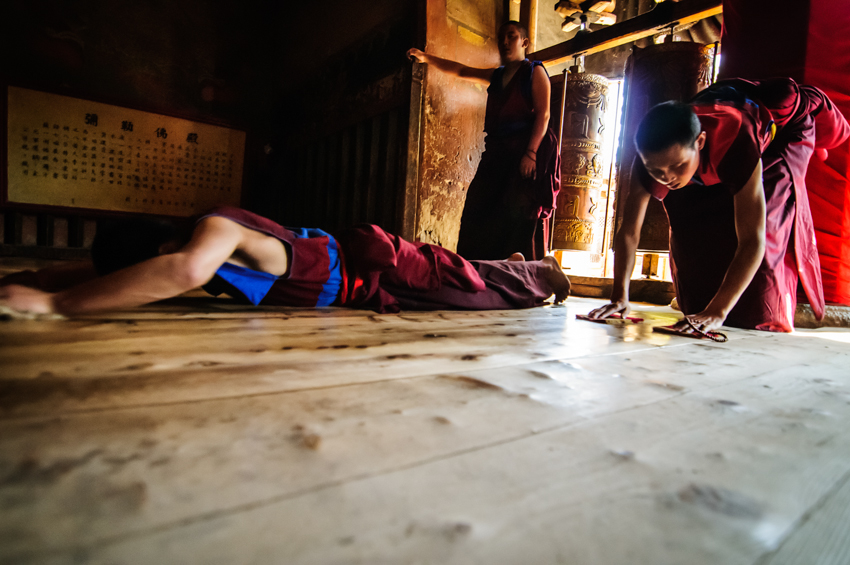
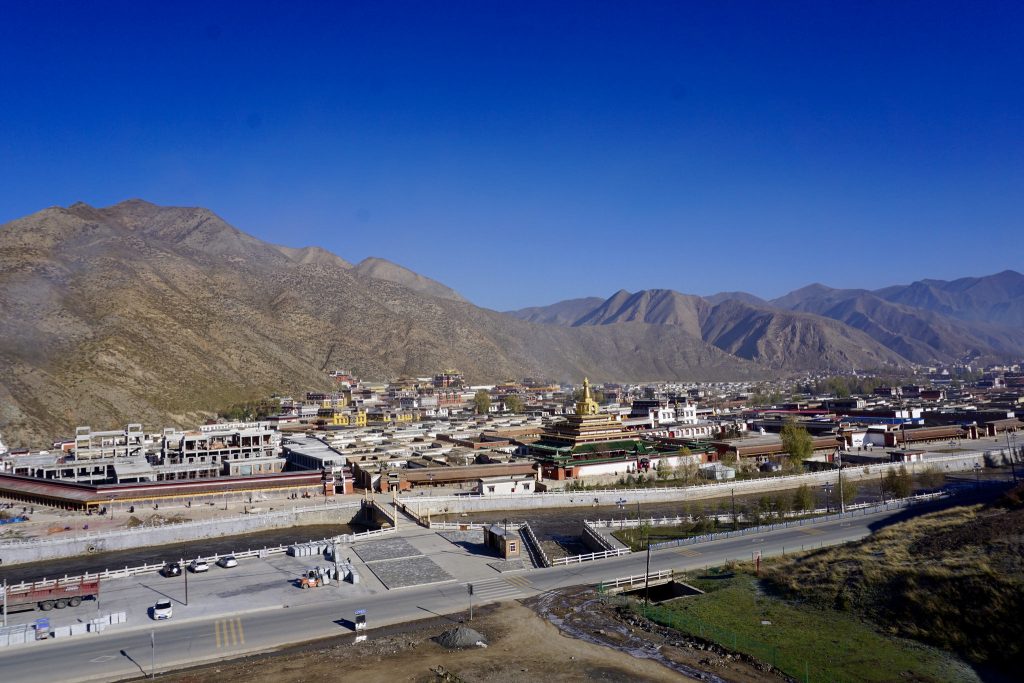
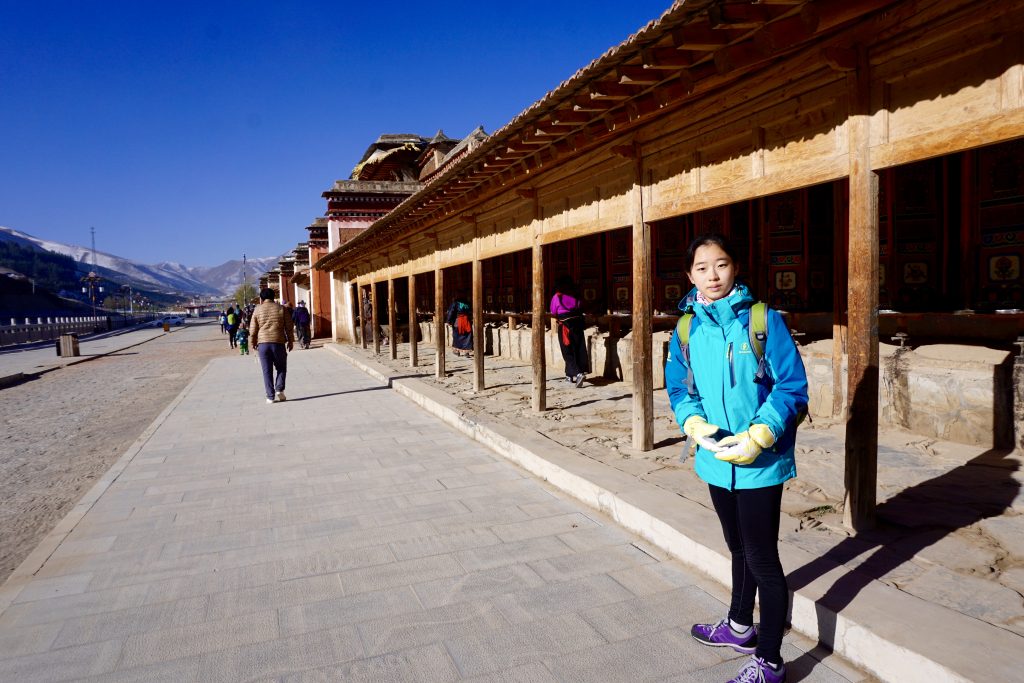
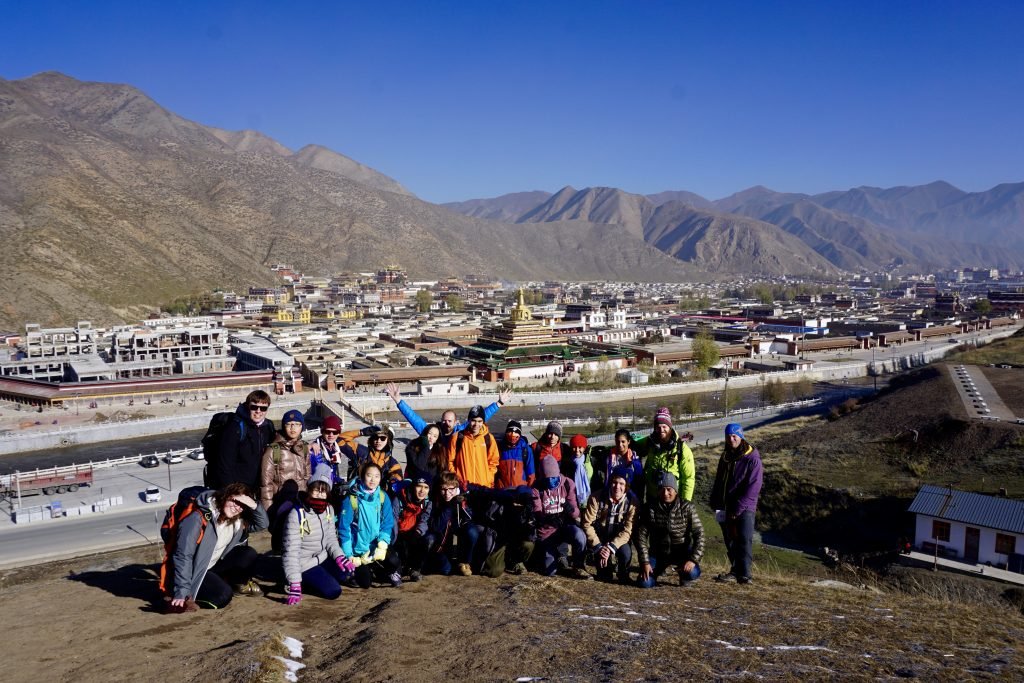
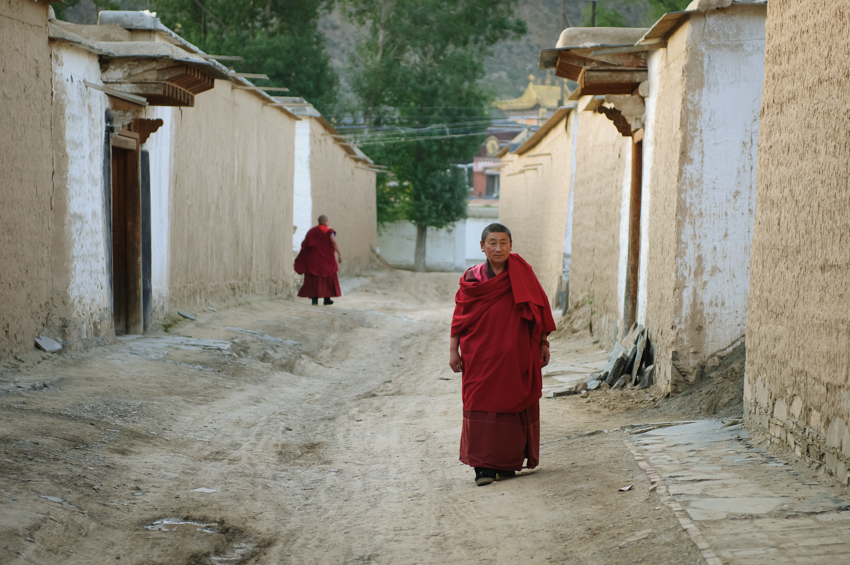
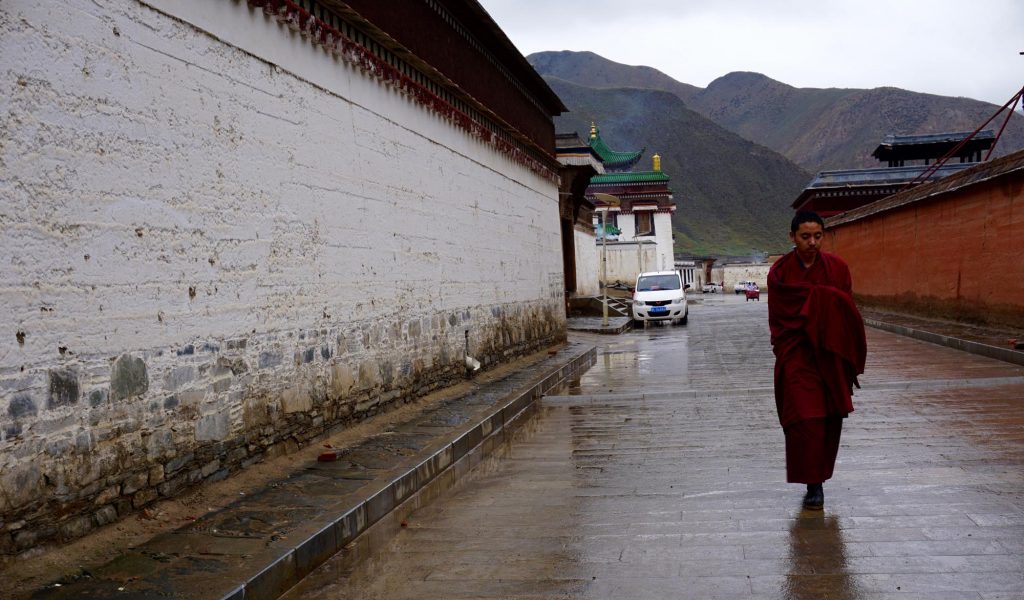
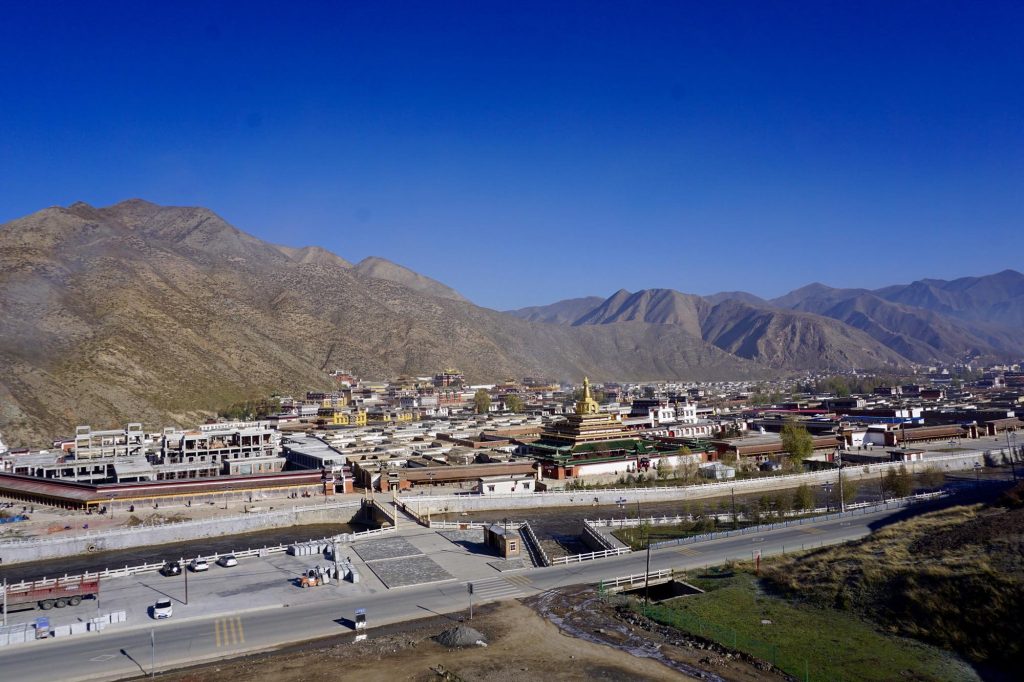
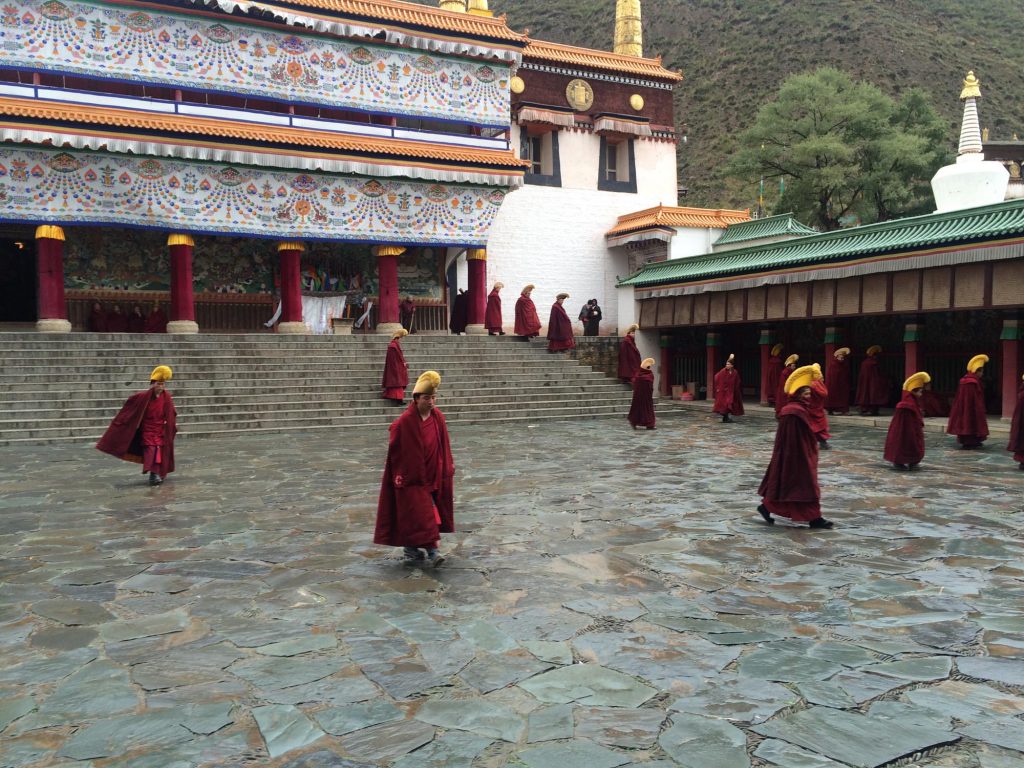
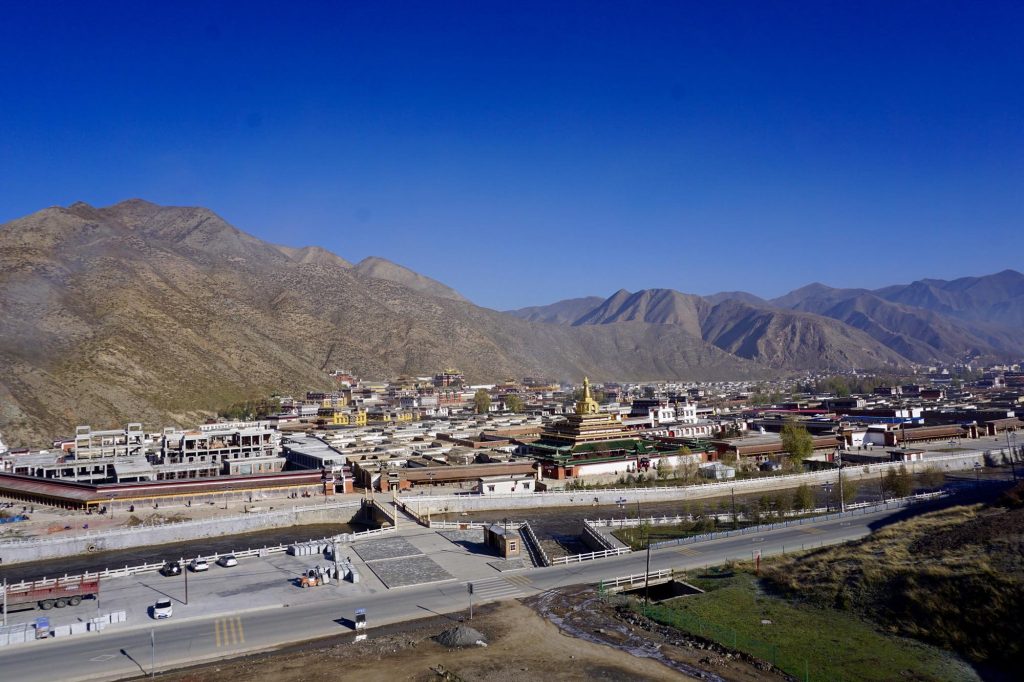
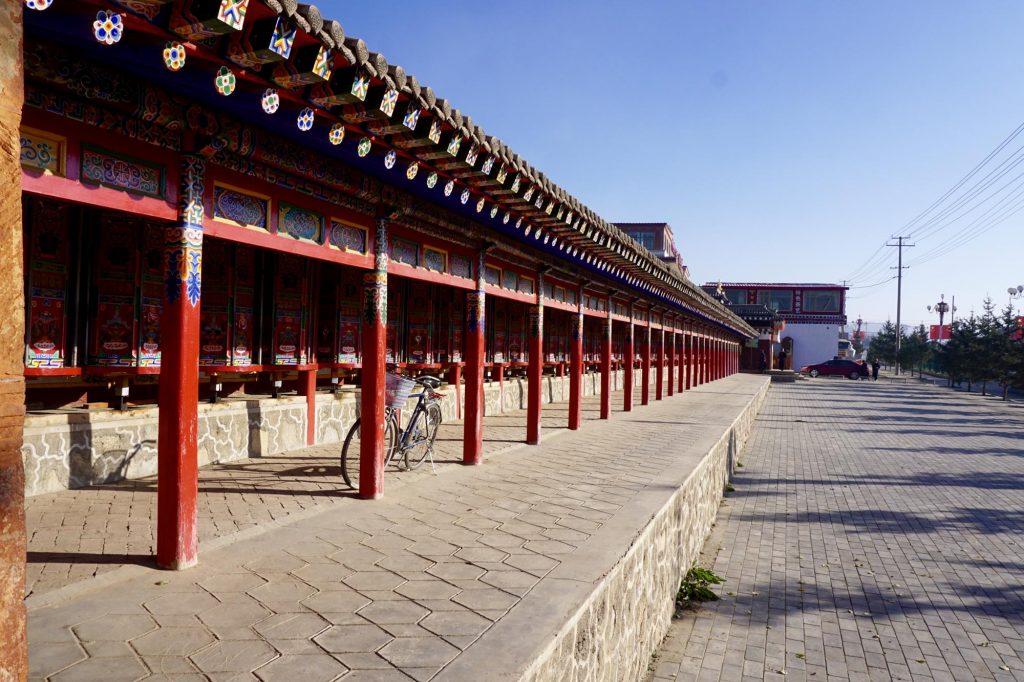
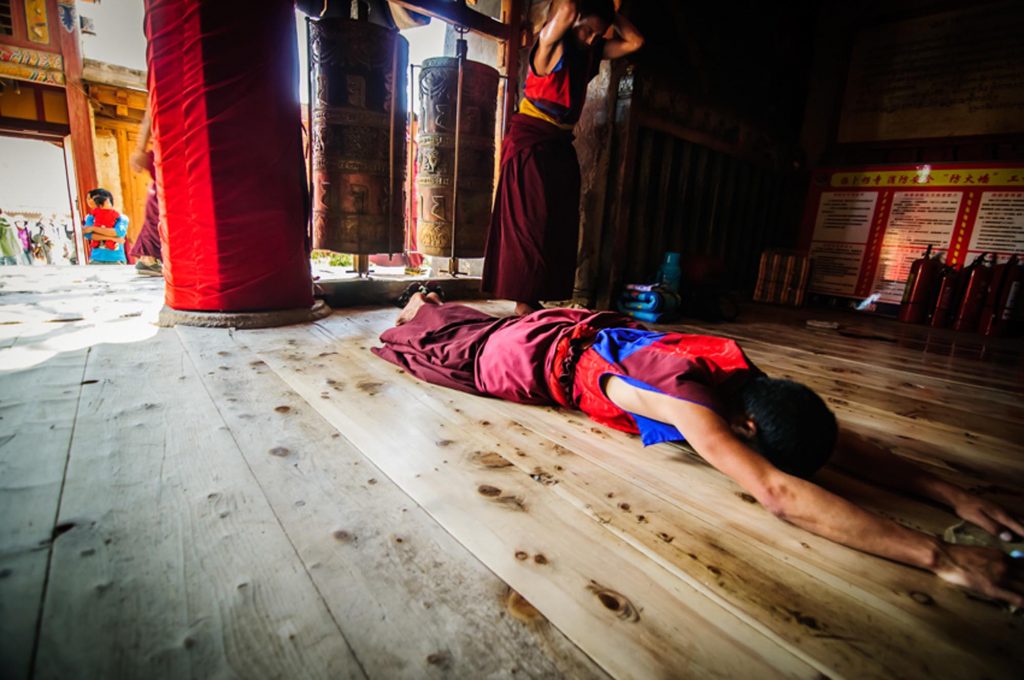
Stand on the corner of the monastery pilgrimage and allow the smells of burnt juniper and grain offerings to fill your nose. Listen to the creaking of spinning prayer wheels and bells tinkling in the wind as you enter Labrang monastery. Here, as you amble around the world’s longest stretch of prayer wheels along a 3.5km long path around the monastery perimeter, you will encounter Tibetan pilgrims who have come to Labrang Monastery to pray for their friends and family. The monastery, with 1,600 monks, 18 temple halls, and six separate institutes of learning is a small city in and of itself and dominates the western part of Labrang town. The white walls and gilded roofs and endless alleys offer limitless opportunities to glimpse monastic life in action. And if you are up for some extra trekking in Gansu, you can walk the big kora on the mountain behind the monastery for about 1.5 hours as you pass Tibetan prayer flags, roaming sheep, and Tibetan pilgrims prostrating around the temple.
Langmusi (Taktsang Lhamo)
Zhagana
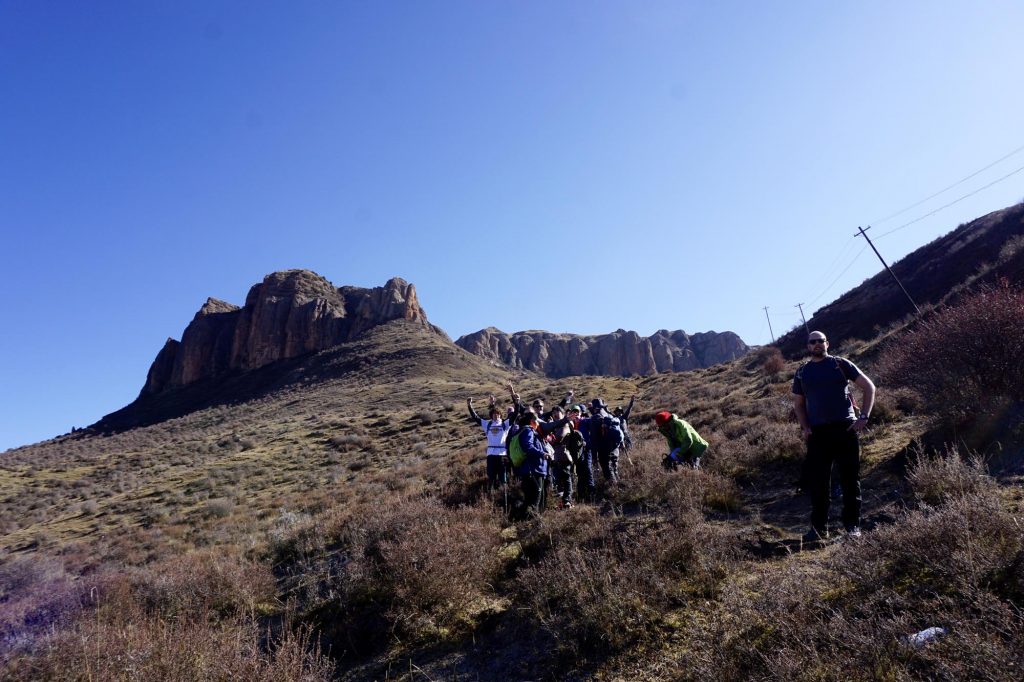
If you are looking for trekking in Gansu, this is Mecca!
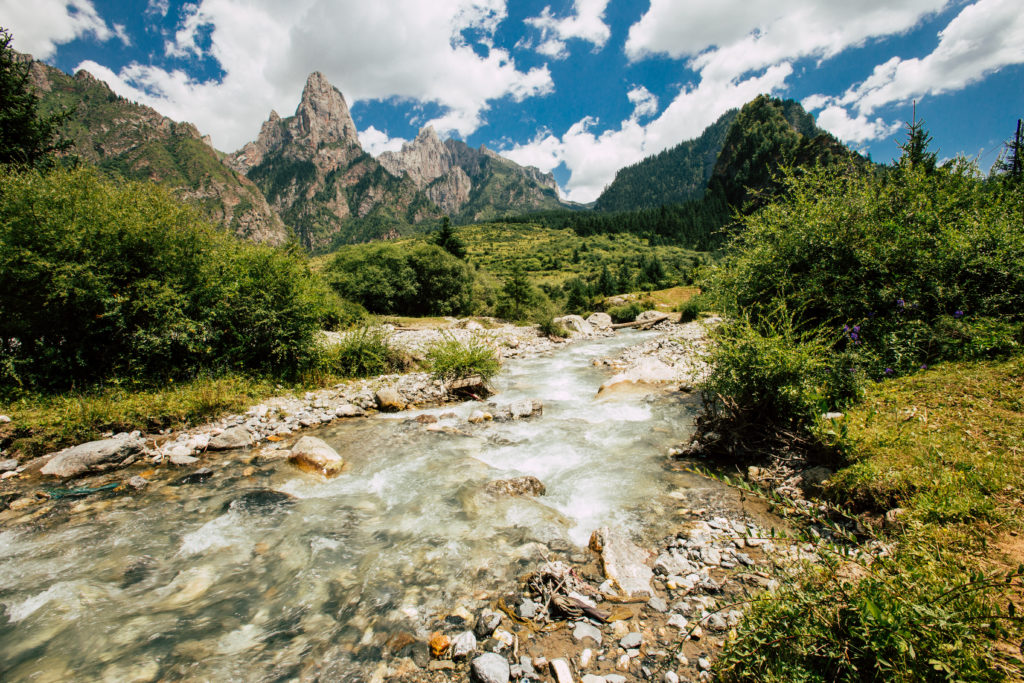
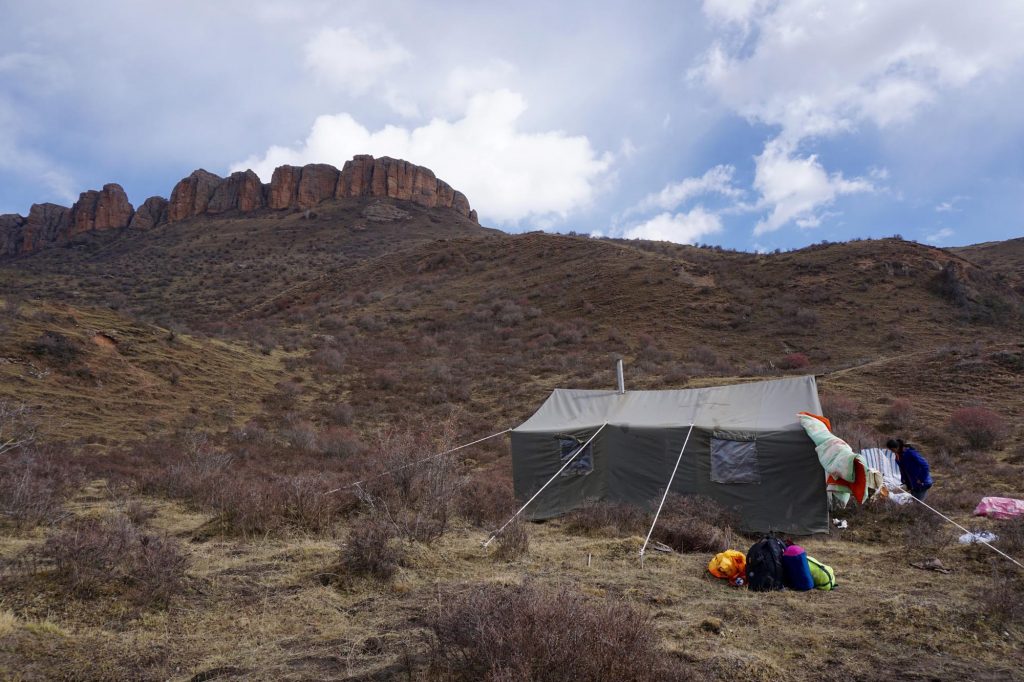
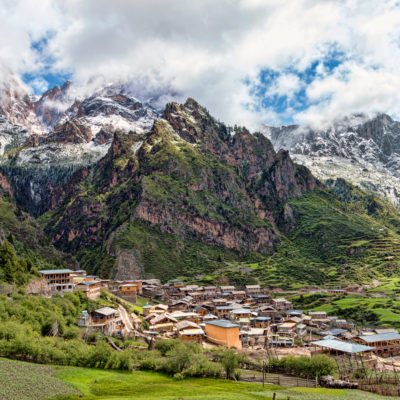
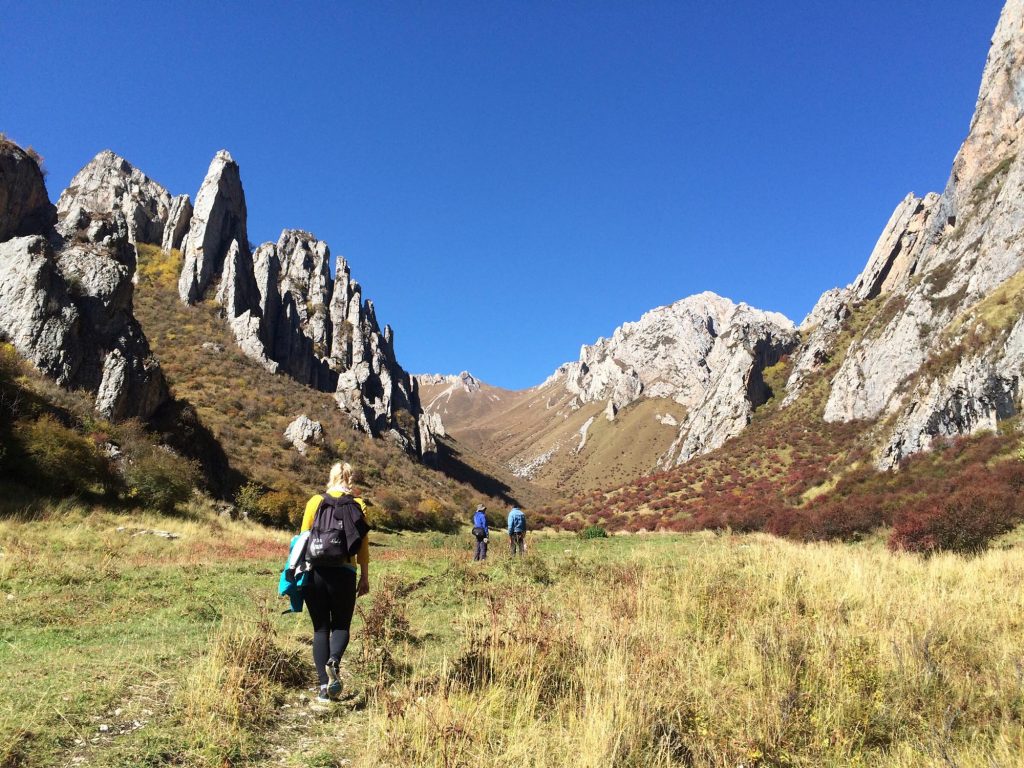
Located in Tiewu County, in the Gannan Tibetan Autonomous Prefecture of Gansu Province, Zhagana is a little sleepy mountain town with a small population of about 2000 local residents. This town sits at a similar elevation to Langmusi at 3,200 meters and, like Langmusi, offers a “little Switzerland” warmth and quaintness. In the local Tibetan dialect Zhagana actually means “Rock Box” and as soon as you get your first breathtaking view of Zhagana you will know why. The town is seated under the soaring 1000 meter tall rock cliffs that make this one of the most picturesque towns in all of western China and the Tibetan Plateau. The main attraction here, of course, is the hiking, featuring not only deep, narrow canyons and gurgling rivers but verdant coniferous forests. If you have traveled for any length of time in Amdo Tibet, you will know that it is hard to find a good, green forest (or any shade at all) because most of the altitudes are too high and the weather is too severe for anything to grow up here. Zhagana is a refreshing exception to these harsh barren landscapes and we are sure you are going to want to spend some time journaling or napping under these tall beautiful evergreen trees as they sway in the breeze above you.
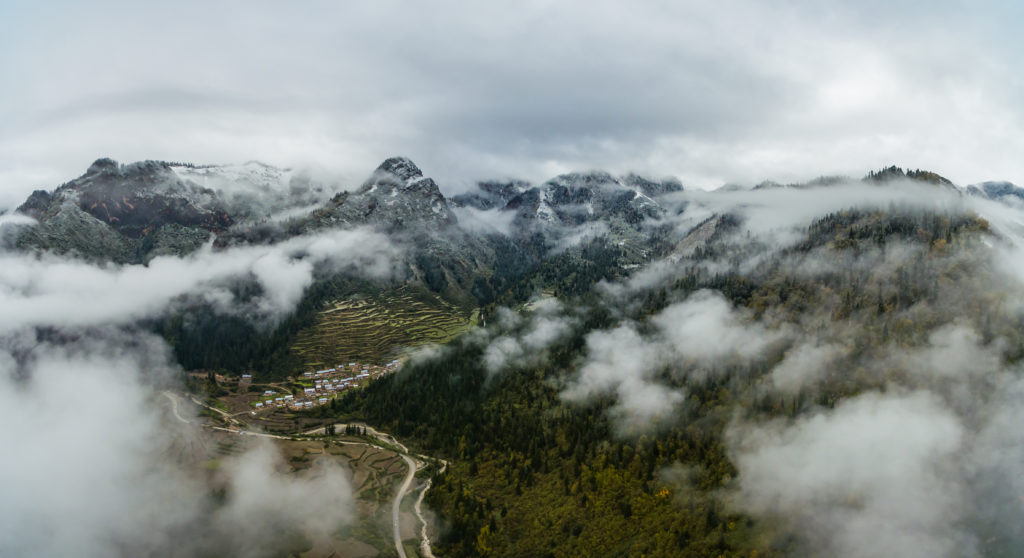
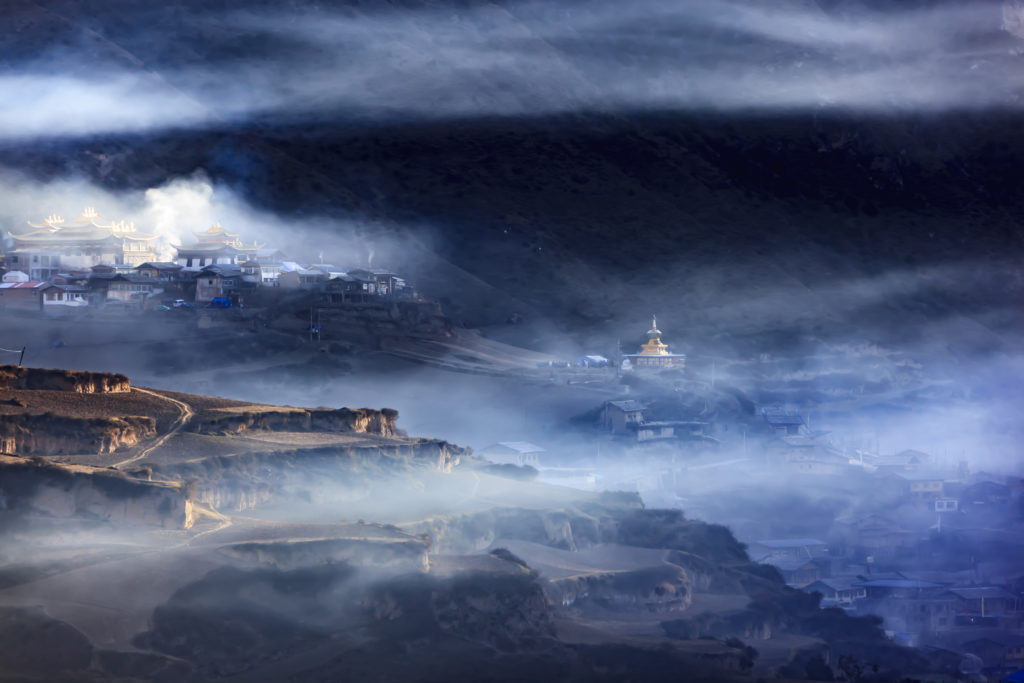
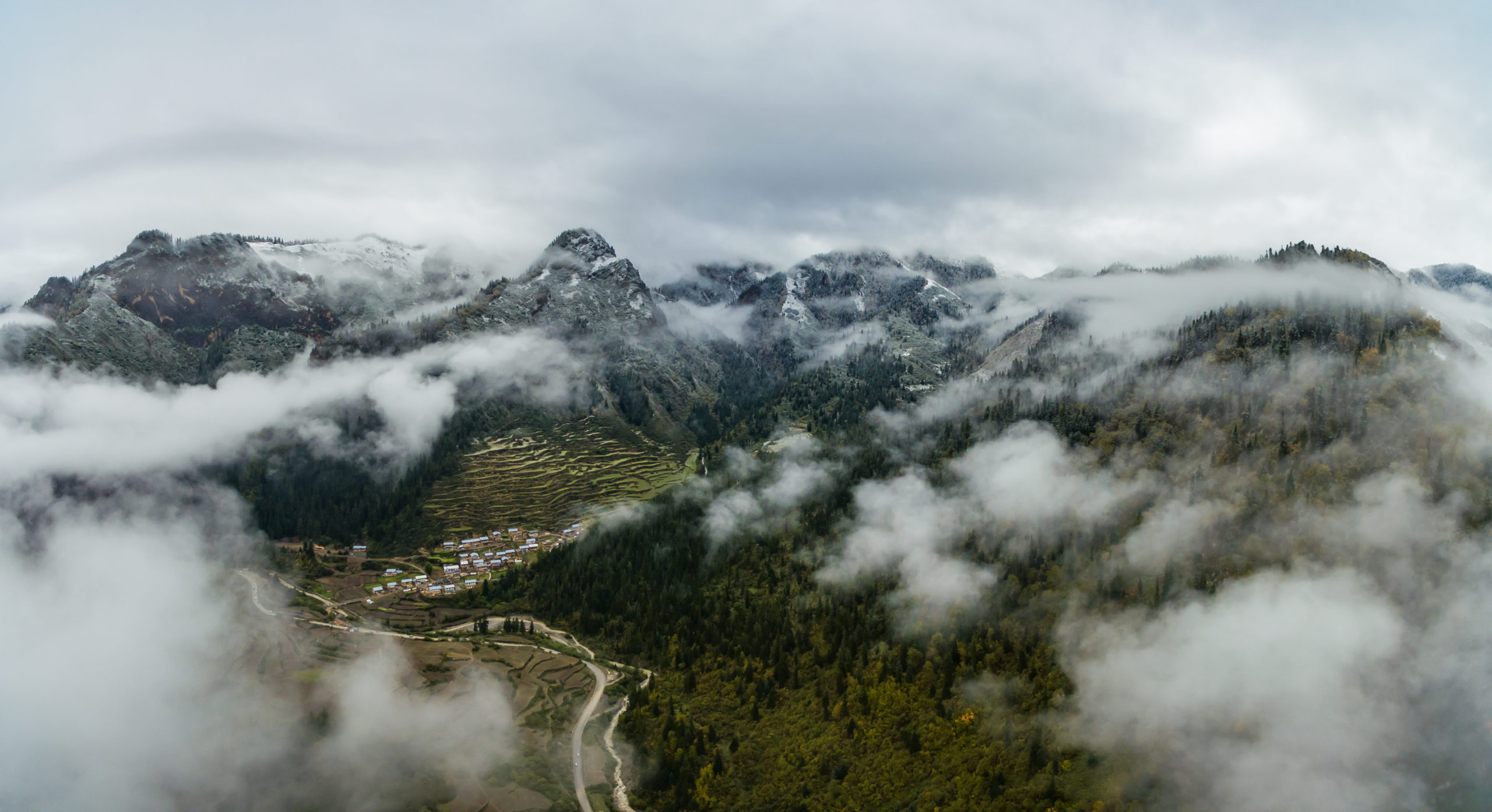
This charming town will take you back to a simpler time when farmers threshed their own barley and carved their own woodwork. There is a small monastery you can visit here and most of the residents still carry the prayer beads of Tibetan Buddhism. The town is at the heart of Amdo Tibet’s nomadic culture and is a crossroads for nomadic yak herders to trade their goods after they have ridden into town from the high surrounding rugged 4,000 meters. The town often can be quite misty in the morning and this gives a very magical feeling as the mist burns off from the high altitude sun and reveals the terraced mud-walled homes and the hay piles stored up for winter livestock feed.
Zoige Wetlands
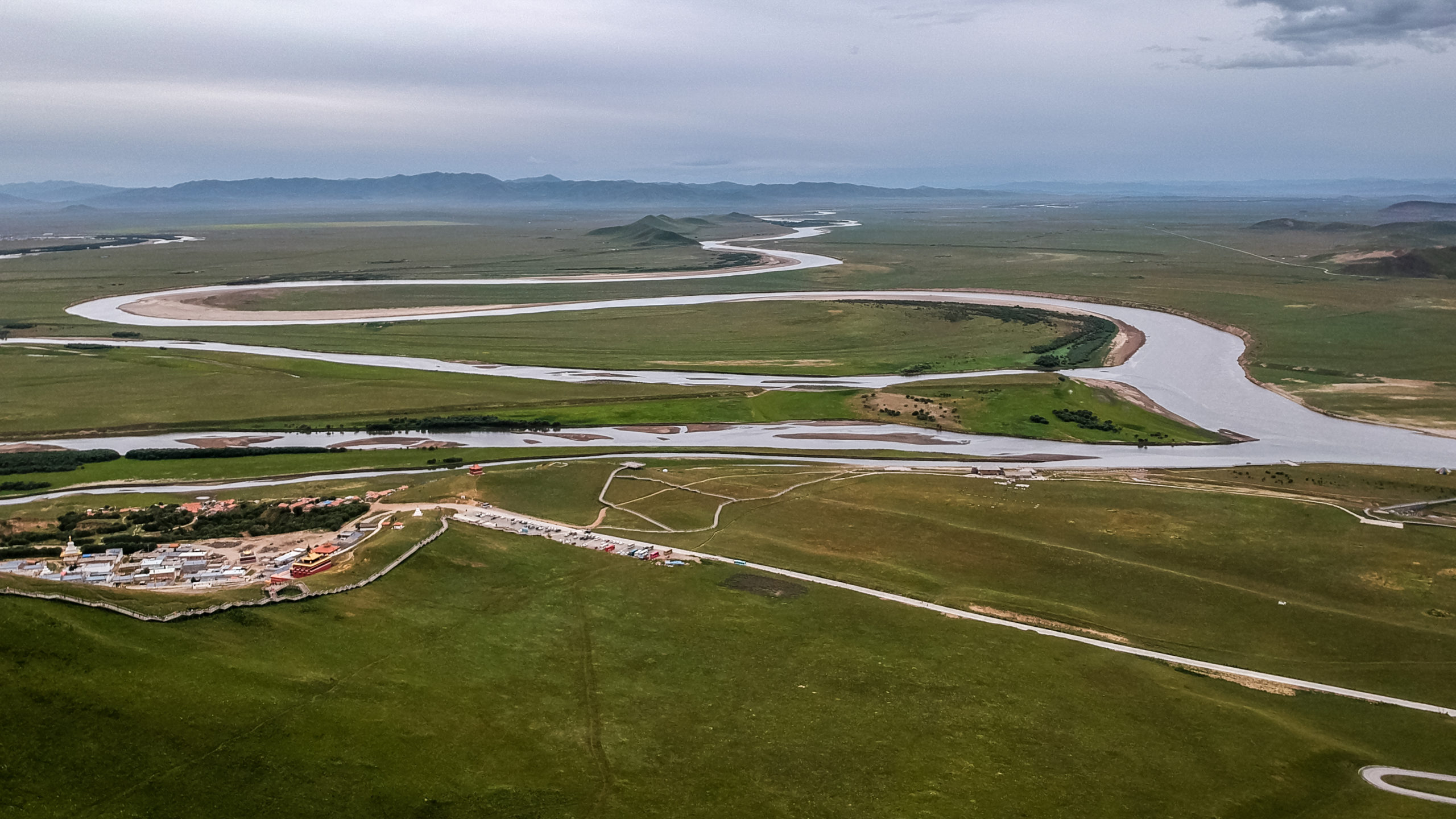
Hezuo
Today the city has been named Hezuo or 合作
Hezuo is the capital city of Tibetan Autonomous Prefecture in southern Gansu Province. Standing at the junction area of Gansu, Qinghai and Sichuan provinces, it is the hub of nomadic activity of the central plains region and the Amdo Tibetan region. And it is also the center of commerce between historical Tibetan and Chinese trading.
Located at the northeast edge of the Tibetan Plateau, Hezuo is 276 kilometers south of Lanzhou.
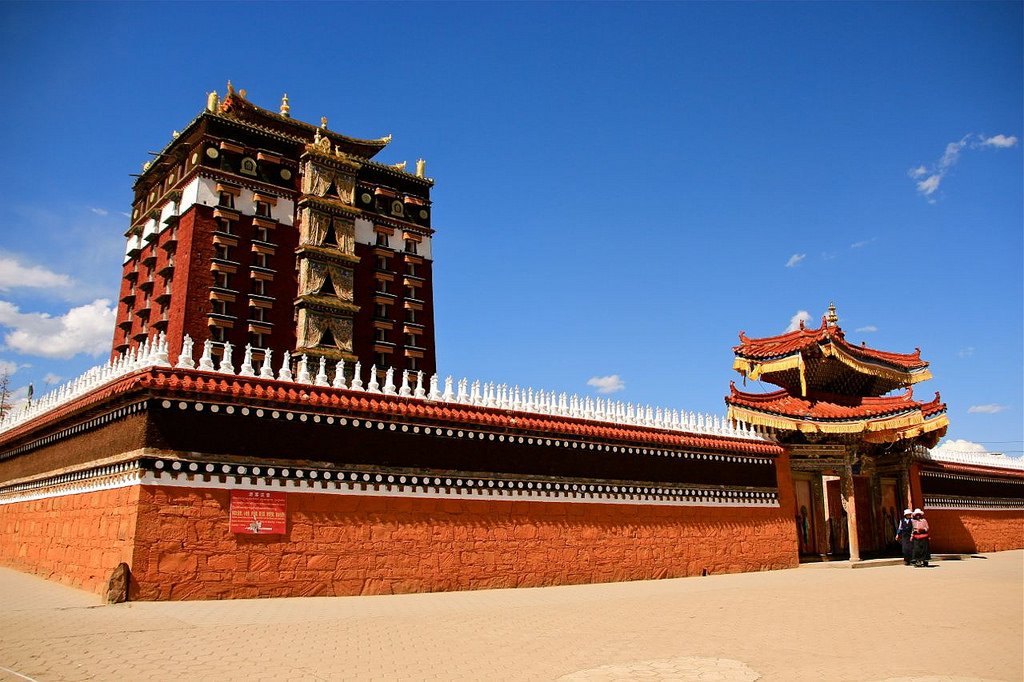
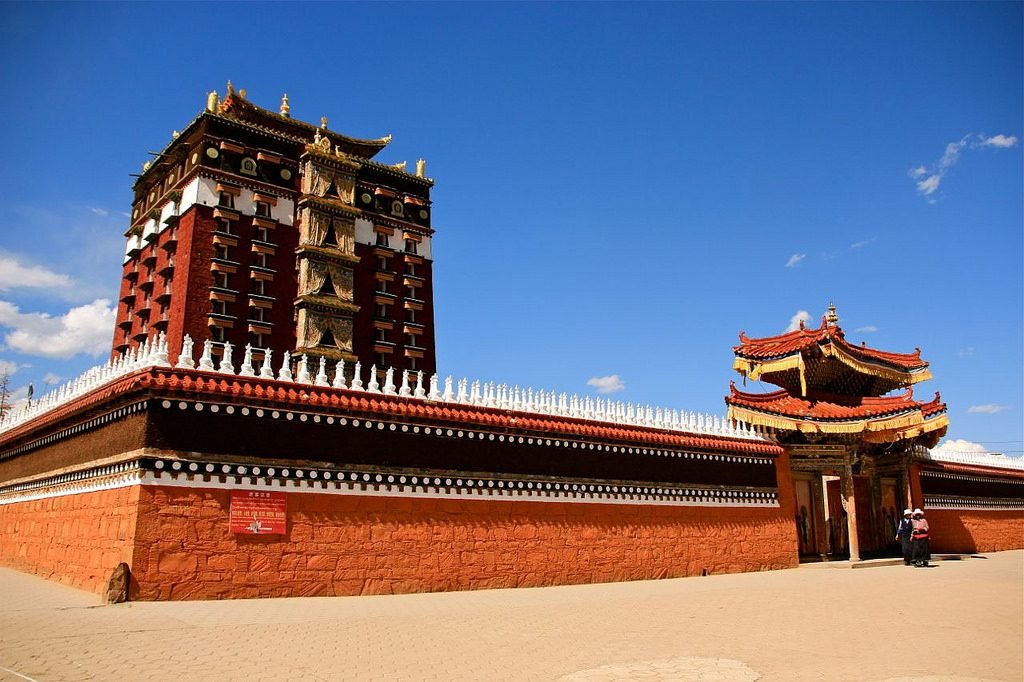
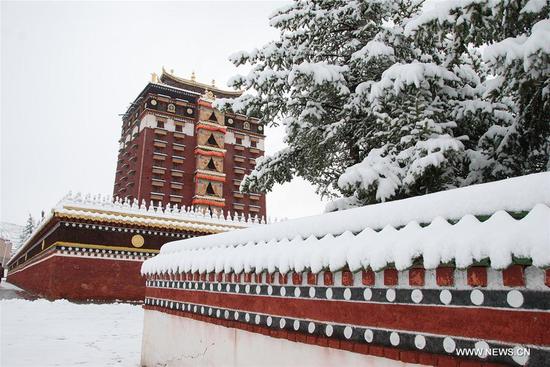
Hezuo’s main attraction is the 9-story Milarepa Temple. It is said that there are only two temples of this kind in the whole Tibetan area, and the one in Hezuo is the only one which has nine floors and is dedicated to a primary founder of Tibetan Buddhism, Milarepa. Milarepa is one of the few saints who is thought to have attained enlightenment in one lifetime. He is often pictured as very thin and bony (as he was meditating and fasting in a cave for most of his latter years) and with his hand to his mouth as he would often sing his lessons and teachings to his disciples so they could better remember his ideas.