Understanding tibet altitude is fundamental for anyone planning to explore the Tibetan Plateau, one of Earth's most remarkable high-elevation destinations. The plateau's extreme heights, combined with its spiritual significance and natural beauty, create unique challenges and rewards for travelers. Whether you're drawn to ancient monasteries, dramatic mountain vistas, or authentic cultural immersion, proper preparation for high-altitude conditions will determine the success of your journey. This comprehensive guide explores the critical aspects of tibet altitude, from regional variations to practical acclimatization strategies that ensure safe, meaningful travel experiences.
Regional Altitude Variations Across Tibet
Tibet's elevation isn't uniform across the vast plateau. The region encompasses dramatic altitude differences that significantly impact travel planning and physical adaptation requirements.
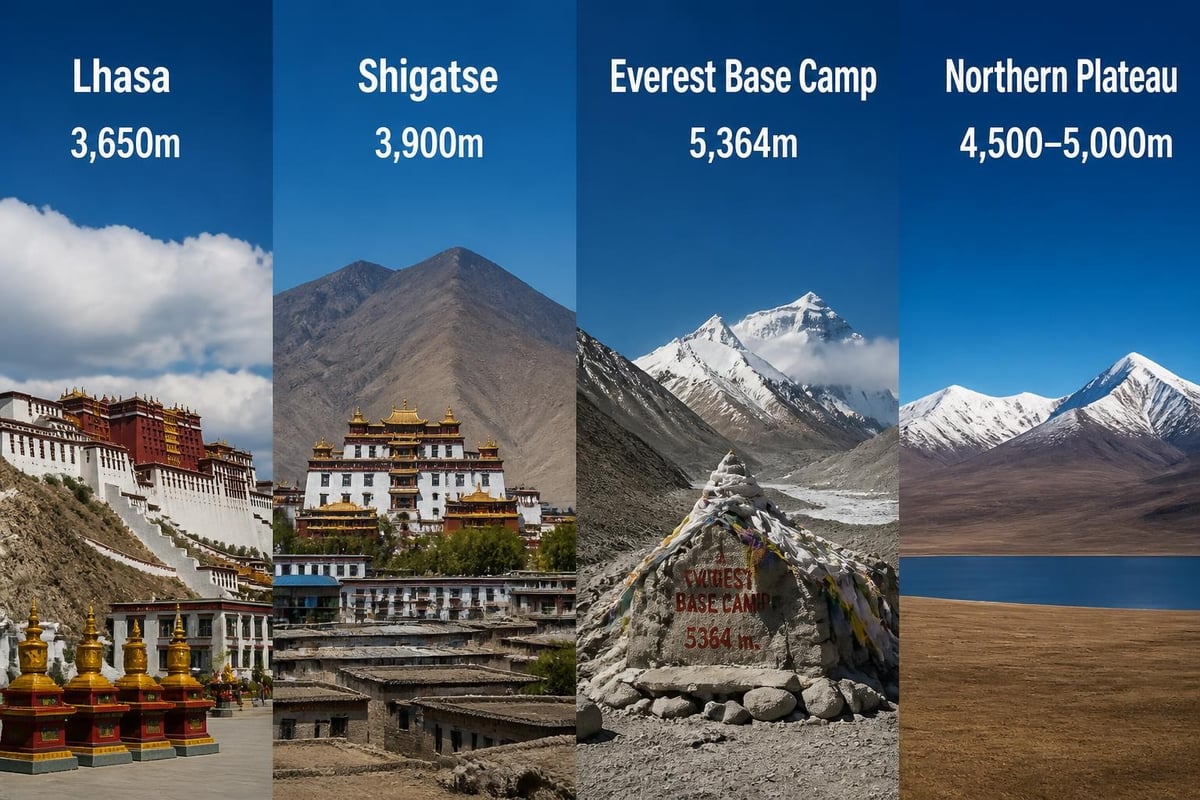
Lhasa, the capital city and most common entry point, sits at approximately 11,975 feet (3,650 meters) above sea level. This elevation alone presents immediate challenges for visitors arriving from lower altitudes. Meanwhile, the northern plateau regions reach even more extreme heights, with some areas exceeding 16,400 feet (5,000 meters).
Understanding Elevation Zones
The elevation variations across Tibet’s regions create distinct travel zones, each requiring different preparation levels:
- Central Tibet (Lhasa Valley): 11,500-12,500 feet elevation
- Western Tibet (Mount Kailash region): 14,800-16,400 feet elevation
- Eastern Tibet (Kham region): 8,200-13,100 feet elevation
- Everest Base Camp: 17,060 feet elevation
- High passes: 16,000-18,400 feet elevation
When planning routes, travelers must account for cumulative altitude exposure. A journey from Lhasa to Everest Base Camp, for example, involves crossing multiple high passes while gradually ascending to extreme elevations. The Lhasa to Everest Base Camp expedition showcases this progression, allowing photographers and adventurers to experience Tibet's elevation changes while capturing stunning imagery across varied landscapes.
| Region | Average Elevation | Primary Challenges | Recommended Acclimatization |
|---|---|---|---|
| Lhasa | 11,975 ft | Initial adjustment | 2-3 days |
| Shigatse | 12,600 ft | Moderate altitude | 1-2 days |
| Namtso Lake | 15,500 ft | High altitude | 3-4 days prior |
| Everest Base Camp | 17,060 ft | Extreme altitude | 5-7 days prior |
Physiological Effects of Tibet Altitude
The human body responds predictably to reduced oxygen availability at high elevations. Understanding these responses helps travelers prepare mentally and physically for the plateau environment.
At tibet altitude levels, atmospheric pressure decreases significantly, reducing oxygen availability by 30-40 percent compared to sea level. This oxygen deficit triggers immediate physiological responses as your body attempts to maintain adequate tissue oxygenation.
Immediate Body Responses
Your cardiovascular system accelerates within hours of arrival. Heart rate increases, breathing becomes more rapid, and blood pressure may elevate. These automatic adjustments represent your body's first-line defense against hypoxia (oxygen deficiency).
Over subsequent days, your body initiates longer-term adaptations:
- Increased red blood cell production: Your kidneys release erythropoietin, stimulating bone marrow to produce more oxygen-carrying red blood cells
- Enhanced oxygen extraction: Muscle cells develop increased capillary density and mitochondrial efficiency
- Ventilatory acclimatization: Breathing patterns adjust to maintain higher oxygen intake
- Metabolic changes: Cellular metabolism shifts to maximize oxygen utilization
These adaptations require time. Rushing the process by ascending too quickly prevents adequate acclimatization and substantially increases altitude sickness risk.
Altitude Sickness: Recognition and Prevention
Acute Mountain Sickness (AMS) affects approximately 25-75 percent of travelers to tibet altitude, depending on ascent speed and individual susceptibility. Recognizing symptoms early and responding appropriately can prevent progression to life-threatening conditions.
Symptom Recognition
Mild AMS symptoms typically appear 6-12 hours after arrival:
- Headache (often throbbing, worse at night)
- Fatigue and weakness
- Dizziness or lightheadedness
- Loss of appetite
- Nausea
- Difficulty sleeping
Moderate to severe AMS indicates dangerous progression:
- Intense headache unresponsive to medication
- Vomiting
- Severe fatigue
- Shortness of breath at rest
- Confusion or altered mental status
- Loss of coordination (ataxia)
The prevention strategies outlined by altitude specialists emphasize gradual ascent as the most effective measure. However, when traveling to Lhasa by flight, gradual ascent becomes impossible, making post-arrival acclimatization crucial.
Evidence-Based Prevention Strategies
Professional guides and medical experts recommend these proven approaches:
Pre-trip preparation (2-4 weeks before departure):
- Maintain cardiovascular fitness through aerobic exercise
- Stay well-hydrated as a baseline habit
- Avoid alcohol and tobacco
- Consider consulting with a travel medicine specialist
Ascent strategy:
- Limit sleeping elevation gain to 1,000-1,600 feet per day above 10,000 feet
- Include rest days every 3-4 days at elevation
- "Climb high, sleep low" when possible
- Avoid physical exertion during initial 48 hours
Hydration and nutrition:
- Drink 3-4 liters of water daily
- Maintain high-carbohydrate diet (70% of calories)
- Avoid excessive salt intake
- Limit caffeine and alcohol consumption
Medical Considerations and Medications
Understanding pharmaceutical options for tibet altitude management helps travelers make informed decisions in consultation with healthcare providers.
Preventive Medications
Acetazolamide (Diamox) remains the most widely recommended preventive medication. This carbonic anhydrase inhibitor accelerates acclimatization by:
- Stimulating breathing to increase oxygen intake
- Reducing alkalosis caused by hyperventilation
- Improving sleep quality at altitude
- Decreasing fluid retention
Standard dosing: 125-250mg twice daily, starting 24 hours before ascent and continuing for 2-3 days at altitude.
Dexamethasone serves as a secondary option or emergency treatment. This potent corticosteroid reduces cerebral edema but doesn't facilitate acclimatization. Reserve dexamethasone for severe AMS or emergency descent situations.
| Medication | Primary Use | Typical Dose | Key Considerations |
|---|---|---|---|
| Acetazolamide | AMS prevention | 125-250mg BID | Sulfa allergy contraindication |
| Dexamethasone | Severe AMS treatment | 4mg Q6H | Doesn't aid acclimatization |
| Ibuprofen | Headache relief | 600mg Q8H | Address symptoms only |
| Ondansetron | Nausea control | 4mg Q8H | Symptomatic relief |
Consult with a physician experienced in altitude medicine before your trip. Individual health conditions, current medications, and specific itinerary details all influence appropriate pharmaceutical strategies.
Practical Acclimatization Protocols
Successful tibet altitude management combines medical knowledge with practical daily behaviors. These protocols, refined through decades of high-altitude travel experience, maximize safety and enjoyment.
The First 48 Hours in Lhasa
Your initial two days establish the foundation for successful acclimatization. Avoid the temptation to immediately explore distant sites or engage in strenuous activities.
Day One priorities:
- Rest at your accommodation after arrival
- Drink fluids frequently (aim for clear urine)
- Eat light, carbohydrate-rich meals
- Take short walks (15-20 minutes maximum)
- Monitor for headache, nausea, or unusual fatigue
- Sleep with room ventilation
Day Two activities:
- Gradual introduction to walking tours in Lhasa
- Visit lower-elevation sites like Jokhang Temple
- Continue aggressive hydration
- Avoid alcohol completely
- Rest when tired rather than pushing through
The comprehensive travel tips compiled by Tibet specialists emphasize patience during this critical adjustment period. Travelers who rush this phase dramatically increase their altitude sickness risk.
Progressive Elevation Exposure
After initial Lhasa acclimatization, plan excursions that increase elevation exposure gradually. This progressive approach builds physiological adaptation while revealing Tibet's diverse landscapes.
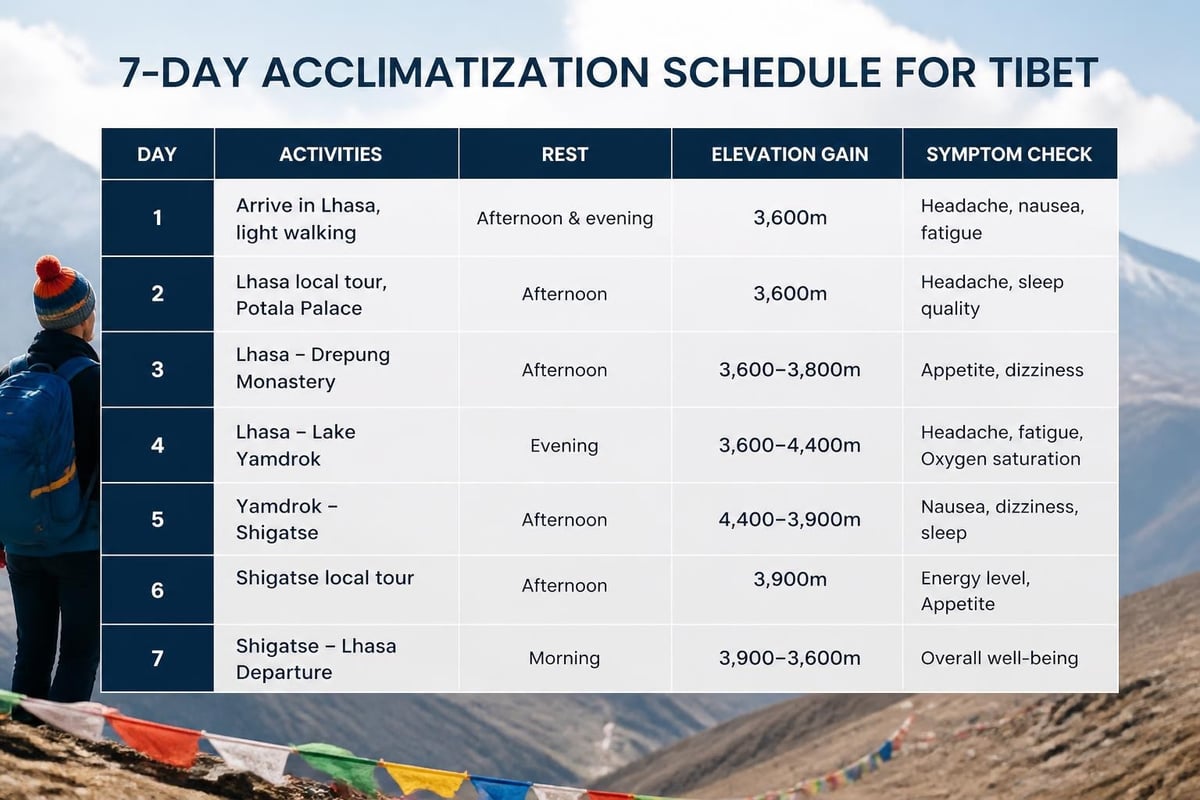
Sample progression schedule:
- Days 1-2: Lhasa city (11,975 ft) – rest and acclimatize
- Day 3: Half-day excursion to Drepung Monastery (12,300 ft)
- Day 4: Full day at Ganden Monastery (13,450 ft), return to Lhasa to sleep
- Day 5: Rest day in Lhasa or light activities
- Day 6: Travel to Shigatse (12,600 ft) for overnight
- Day 7: Gradual ascent toward higher destinations
This pattern of "climb high, sleep low" optimizes acclimatization. Daytime exposure to higher elevations stimulates adaptation, while returning to lower sleeping elevations reduces overnight stress on your body.
Cultural Practices and Altitude Adaptation
Tibetan communities have developed cultural practices over millennia that naturally support high-altitude living. Understanding and respectfully participating in these traditions can enhance both acclimatization and cultural immersion.
Traditional Tibetan Medicine Approaches
Tibetan medicine (Sowa Rigpa) addresses altitude challenges through holistic methods that complement modern medical strategies. Local practitioners often recommend:
- Butter tea (po cha): High-calorie, warming beverage that aids hydration and provides quick energy
- Tsampa (roasted barley flour): Complex carbohydrate staple that sustains energy at elevation
- Herbal preparations: Traditional formulations containing rhodiola, saffron, and other altitude-supportive herbs
- Breathing exercises: Contemplative practices that enhance respiratory efficiency
While scientific evidence for some traditional remedies remains limited, many travelers find these practices beneficial as complementary approaches alongside proven medical strategies.
Mindful Travel Pace
The Tibetan concept of "lu" (body-energy) emphasizes listening to physical signals and respecting the body's pace. This philosophical approach aligns remarkably well with modern altitude medicine recommendations.
When exploring culturally immersive experiences across the Tibetan Plateau, adopting a mindful travel pace yields multiple benefits:
- Reduced altitude sickness incidence
- Deeper engagement with local communities
- Enhanced photography opportunities
- Greater spiritual and cultural understanding
- Sustainable, respectful tourism practices
Small group tours naturally support this measured approach, allowing flexibility for individual acclimatization needs while maintaining itinerary structure.
Technology and Connectivity Considerations
Modern travelers increasingly rely on digital connectivity for navigation, communication, and safety. Understanding technology limitations at tibet altitude helps set realistic expectations.
Device Performance at High Elevation
Electronic devices experience reduced performance at extreme altitudes due to several factors:
- Battery degradation: Cold temperatures and low air pressure reduce battery efficiency by 20-40 percent
- LCD screen issues: Displays may respond sluggishly in cold conditions
- GPS accuracy: While satellite signals remain strong, reduced atmospheric pressure can affect barometric altimeter readings
- Solar charging: Intense high-altitude UV radiation can damage unprotected solar panels
Practical solutions include carrying extra batteries, keeping devices warm close to your body, and using protective cases designed for extreme conditions.
Staying Connected
Maintaining communication becomes crucial for both safety and sharing experiences. Traditional roaming services in Tibet can be expensive and unreliable. Modern solutions like Umi eSIM offer convenient alternatives that work across multiple destinations on the Tibetan Plateau without requiring new SIM cards for each region. The pay-as-you-go model provides flexibility for varying data needs throughout your journey, from checking weather forecasts to sharing real-time updates with family.
Consider satellite communication devices for remote areas where cellular coverage doesn't exist. Personal locator beacons (PLBs) and satellite messengers provide emergency communication capability in true wilderness settings.
Seasonal Altitude Considerations
Tibet altitude effects vary seasonally, with weather patterns significantly influencing travel comfort and risk levels. Understanding these variations helps optimize timing for your plateau journey.
Optimal Travel Seasons
| Season | Months | Altitude Factors | Advantages | Challenges |
|---|---|---|---|---|
| Spring | April-May | Moderate conditions | Fewer crowds, blooming landscapes | Variable weather, some snow |
| Summer | June-August | Warmest temperatures | Best weather, festival season | Crowds, monsoon in border regions |
| Autumn | September-October | Stable conditions | Clear skies, ideal photography | Popular season, higher prices |
| Winter | November-March | Extreme cold | Empty sites, cultural authenticity | Closed routes, harsh conditions |
Summer's warmer temperatures might seem advantageous for altitude management, but the monsoon season brings complications in southern border regions. Autumn consistently offers the most stable conditions, though this popularity requires advance booking.
Winter travel to tibet altitude presents unique challenges beyond cold. Many high passes close due to snow, limiting route options. However, winter also reveals authentic Tibetan life as tourism pressure decreases, allowing deeper cultural connections with local communities.
Special Populations and Altitude
Certain travelers require additional considerations when planning tibet altitude journeys. Individual health status significantly impacts high-elevation risk profiles.
Children at High Altitude
Children can safely travel to moderate altitudes, but require special attention. The health precautions recommended by altitude specialists note that children:
- Cannot always articulate altitude sickness symptoms clearly
- May exhibit symptoms differently than adults (unusual fussiness, loss of playfulness)
- Require more conservative ascent rates
- Should never be given acetazolamide without pediatric dosing guidance
Consider limiting children's maximum altitude to 12,000-13,000 feet unless they have previous high-altitude experience and show excellent acclimatization.
Older Adults
Age alone doesn't contraindicate high-altitude travel, but underlying cardiovascular or respiratory conditions become more relevant. Healthy older adults often acclimatize successfully when following conservative protocols.
Pre-existing conditions requiring special evaluation include:
- Coronary artery disease
- Congestive heart failure
- Chronic obstructive pulmonary disease (COPD)
- Uncontrolled hypertension
- Previous stroke or transient ischemic attacks
Medical clearance from your primary physician, ideally supplemented by altitude medicine consultation, provides appropriate risk assessment and individualized recommendations.
Pregnancy Considerations
Current medical guidance generally advises against travel above 12,000 feet during pregnancy, particularly during the first trimester and third trimester. The reduced oxygen availability poses theoretical risks to fetal development, though research in this area remains limited.
Pregnant travelers should consult maternal-fetal medicine specialists before planning tibet altitude journeys. If travel proceeds, continuous monitoring and conservative altitude limits become essential.
Emergency Response and Descent Planning
Despite careful preparation, altitude emergencies occasionally occur. Understanding recognition criteria and response protocols can be lifesaving.
When to Descend Immediately
Certain symptoms demand immediate descent regardless of time, weather, or itinerary considerations:
-
High Altitude Cerebral Edema (HACE) indicators:
- Severe coordination loss (cannot walk heel-to-toe)
- Confusion or altered consciousness
- Hallucinations
- Severe headache unresponsive to medication
-
High Altitude Pulmonary Edema (HAPE) indicators:
- Shortness of breath at rest
- Gurgling or rattling sounds in chest
- Pink or frothy sputum
- Persistent cough
- Cyanosis (blue lips or fingernails)
Both HACE and HAPE represent medical emergencies requiring descent of at least 1,600-3,300 feet (500-1,000 meters) as rapidly as safely possible. Supplemental oxygen and emergency medications provide temporary support during descent, but descent remains the definitive treatment.
Descent Logistics
Professional tour operators maintain emergency descent protocols and communication systems. When traveling independently, ensure you have:
- Detailed understanding of descent routes from each location
- Emergency contact information for local medical facilities
- Transportation arrangements that can activate quickly
- Travel insurance covering emergency evacuation
- Communication devices functioning at altitude
The detailed altitude sickness management guide provides additional emergency protocols and medication dosing for various scenarios.
Transportation and Altitude Transitions
How you arrive at tibet altitude significantly impacts your acclimatization trajectory. Each transportation method presents distinct advantages and challenges.
Flying versus Overland Entry
Flying directly to Lhasa:
- Rapid elevation gain from near sea level to 11,975 feet
- Higher initial altitude sickness risk
- Requires extended Lhasa acclimatization period
- Time-efficient for shorter trips
Overland entry (from Xining, Chengdu, or Nepal):
- Gradual elevation increase over multiple days
- Natural acclimatization during transit
- Scenic journey through varied landscapes
- Requires more total travel time
The transportation considerations for high-altitude travel emphasize that overland approaches, while slower, significantly reduce altitude sickness incidence. The Qinghai-Tibet Railway from Xining provides a particularly scenic gradual ascent option, with supplemental oxygen available in train cars.
Internal Tibet Transportation
Once on the plateau, vehicle travel between sites requires altitude awareness. High passes between valleys often exceed sleeping elevations by 3,000-5,000 feet. Brief exposure to these extreme heights generally poses minimal risk for acclimatized travelers, but those showing altitude sickness symptoms should delay crossing high passes until symptoms resolve.
Private vehicles offer flexibility for rest stops and pace adjustment. Group tours provide experienced drivers familiar with altitude-related driving challenges, including reduced engine performance and altered brake effectiveness at extreme elevations.
Long-term Altitude Exposure Benefits
Extended stays at tibet altitude trigger profound physiological adaptations that persist after returning to lower elevations. Understanding these changes reveals both benefits and considerations for future high-altitude travel.
Physiological Advantages
After 2-3 weeks at altitude, your body achieves substantial acclimatization:
- Red blood cell count increases 10-20 percent above baseline
- Capillary density in muscles improves significantly
- Mitochondrial efficiency increases
- Ventilatory capacity expands
- Oxygen utilization at cellular level optimizes
These adaptations persist for approximately 2-3 weeks after descent, providing enhanced aerobic capacity during that period. Athletes sometimes exploit this effect through "altitude training" camps.
Considerations for Future Travel
Previous successful tibet altitude experience doesn't guarantee immunity to altitude sickness on subsequent trips. Each ascent requires fresh acclimatization, though prior adaptation may make the process faster and more comfortable.
Interestingly, some research suggests repeated altitude exposure may increase susceptibility to altitude sickness if insufficient time for de-acclimatization passes between trips. The mechanisms remain poorly understood, highlighting the importance of respecting altitude regardless of previous experience.
Ecological and Sustainable Altitude Tourism
The fragile high-altitude ecosystem of the Tibetan Plateau demands conscientious tourism practices. Environmental awareness at tibet altitude extends beyond personal safety to include ecological stewardship.
High-Altitude Environmental Sensitivity
The plateau's extreme conditions create ecosystems with remarkably slow recovery rates from disturbance:
- Plant growth occurs slowly due to short growing seasons
- Soil development proceeds at glacial pace in cold, dry conditions
- Wildlife populations maintain delicate balances
- Water resources remain scarce in many regions
- Permafrost degradation accelerates with climate change
Responsible travelers minimize their ecological footprint through:
- Strict adherence to "pack in, pack out" waste principles
- Use of established trails and campsites only
- Proper human waste disposal using portable systems
- Fuel-efficient transportation choices
- Support for local conservation initiatives
Community-Benefiting Tourism Models
Sustainable tourism at tibet altitude should directly benefit local Tibetan communities. Ethical tour operators prioritize:
- Local guide employment and fair wages
- Homestay accommodations when culturally appropriate
- Purchases from local artisans and businesses
- Culturally sensitive interaction protocols
- Revenue sharing with community development projects
Small group tours naturally align with these principles, allowing meaningful cultural exchange while limiting environmental impact. When selecting tour operators for Tibetan Plateau experiences, prioritize those demonstrating genuine commitment to community benefit and ecological preservation.
Successfully managing tibet altitude transforms what could be a challenging obstacle into an integral part of your plateau journey. The physiological adaptations, cultural insights gained through mindful pacing, and deep appreciation for the resilient ecosystems thriving at extreme elevation all enrich the travel experience immeasurably. Elevated Trips specializes in small-group, culturally immersive journeys across the Tibetan Plateau that prioritize proper acclimatization while supporting local communities. Their experienced guides ensure safe altitude management while facilitating authentic connections with this extraordinary landscape and its people.