Understanding the Tibet Everest Route
The northern approach to Mount Everest begins in Lhasa, the spiritual heart of Tibet, and winds through some of the most spectacular terrain on Earth. This route differs significantly from the southern Nepal approach in both logistics and character.
Geography and Access Points
Tibet Everest Base Camp sits at approximately 5,150 meters (16,900 feet) on the Rongbuk Glacier, positioned higher than its Nepali counterpart. The journey typically spans 600-700 kilometers from Lhasa, crossing multiple high-altitude passes and traversing the vast Tibetan Plateau.
Key geographical features along the route include:
- Gyatso La Pass at 5,220 meters, offering first panoramic views of the Himalayan range
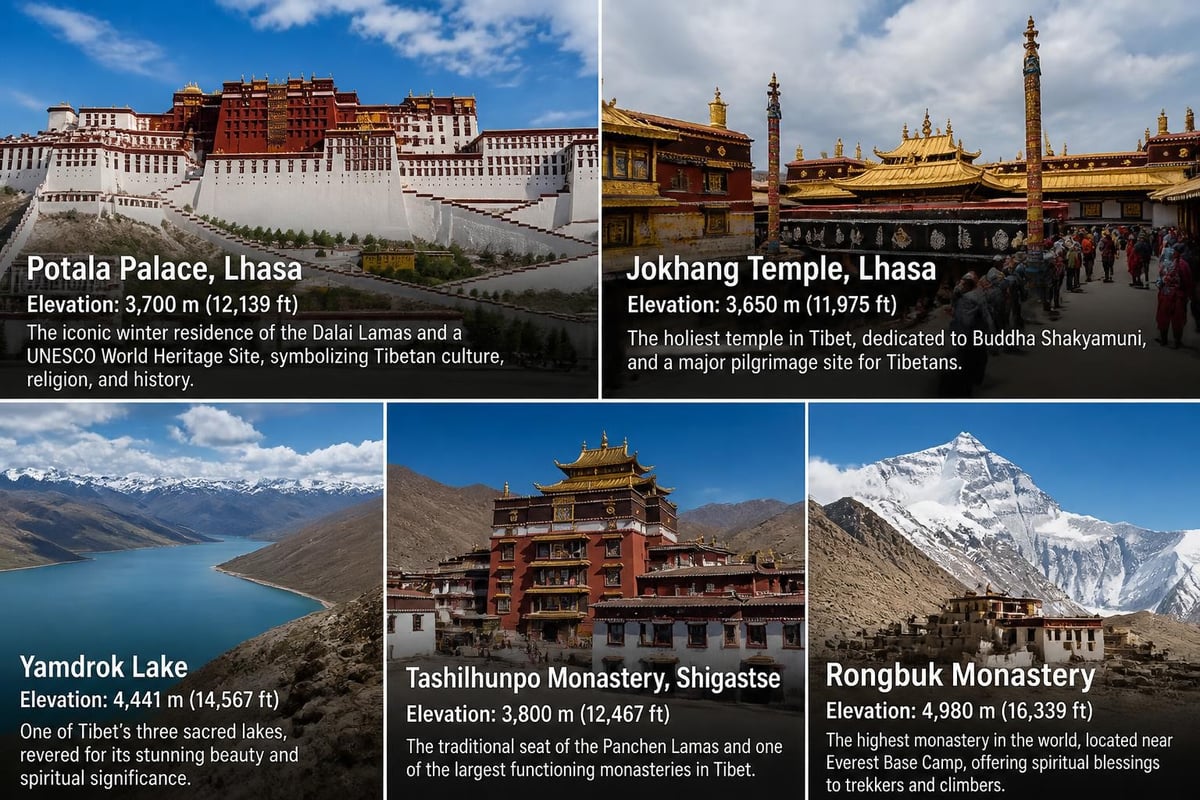
- Rongbuk Monastery, the world's highest monastery at 4,980 meters
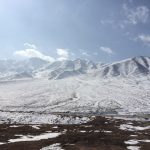
- The Tibetan Plateau itself, averaging 4,500 meters elevation throughout
- Multiple sacred lakes including Yamdrok Tso and potentially Namtso
The landscape transitions from the populated Yarlung Tsangpo valley through barren high-altitude desert to the dramatic Himalayan approaches. This gradual ascent helps with acclimatization while showcasing Tibet's environmental diversity.
Climate and Seasonal Considerations
Tibet Everest experiences extreme weather variations that directly impact travel feasibility. The region's high-altitude continental climate creates distinct seasonal windows for visitors.
| Season | Temperature Range | Conditions | Accessibility |
|---|---|---|---|
| Spring (April-May) | -5°C to 15°C | Clear skies, minimal precipitation | Excellent |
| Summer (June-August) | 5°C to 20°C | Monsoon affects southern approaches | Moderate |
| Autumn (September-October) | 0°C to 15°C | Crisp, stable weather | Excellent |
| Winter (November-March) | -20°C to 5°C | Extreme cold, possible road closures | Limited |
The optimal visiting windows fall between April and May or September and October. These periods offer stable weather patterns, clearer mountain views, and comfortable daytime temperatures. Summer months bring moisture from the Indian monsoon, though the Tibetan Plateau's rain shadow effect means precipitation remains relatively limited compared to Nepal's south side.
Cultural and Spiritual Dimensions
The Tibet Everest journey provides far more than mountain scenery. This route passes through the heartland of Tibetan Buddhism, where spiritual practices and daily life remain deeply intertwined.
Sacred Sites Along the Route
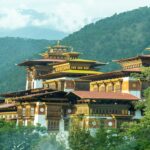
Travelers encounter numerous monasteries and pilgrimage sites that have anchored Tibetan spiritual life for centuries. Tashilhunpo Monastery in Shigatse serves as the traditional seat of the Panchen Lama and houses spectacular religious artworks. The monastery complex includes a 26-meter gilded statue of Maitreya Buddha and extensive collections of sacred texts.
Rongbuk Monastery holds particular significance as the spiritual gateway to Chomolungma, the Tibetan name for Everest meaning "Goddess Mother of the World." Founded in 1902, this monastery allows visitors to witness monks maintaining centuries-old practices at the edge of extreme wilderness.
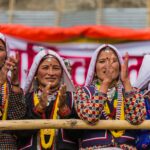
Local communities along the route practice polyandry, sky burials, and maintain traditions dating back over a millennium. Respectful engagement with these customs enriches the journey beyond simple sightseeing.
Environmental Stewardship in Tibetan Culture
Traditional Tibetan ecological wisdom offers valuable lessons for modern sustainable tourism. Buddhist principles of non-harm extend to the natural environment, creating a cultural framework that aligns closely with contemporary ecotourism values.
Local communities have practiced sustainable grazing for centuries, rotating yak herds across vast pasturelands to prevent overuse. Water sources hold sacred status, resulting in natural conservation practices. These indigenous approaches demonstrate that environmental protection and cultural preservation strengthen each other.
However, climate change poses emerging risks to the Mount Everest region, affecting glacial stability and weather patterns. Supporting tours that employ local guides, use locally-owned accommodations, and minimize waste helps communities maintain their traditional land stewardship while adapting to modern pressures.
Planning Your Tibet Everest Journey
Successful travel to Tibet Everest requires significantly more preparation than typical international trips. Understanding permit requirements, acclimatization needs, and logistical realities ensures both safety and legal compliance.
Permit Requirements and Regulations
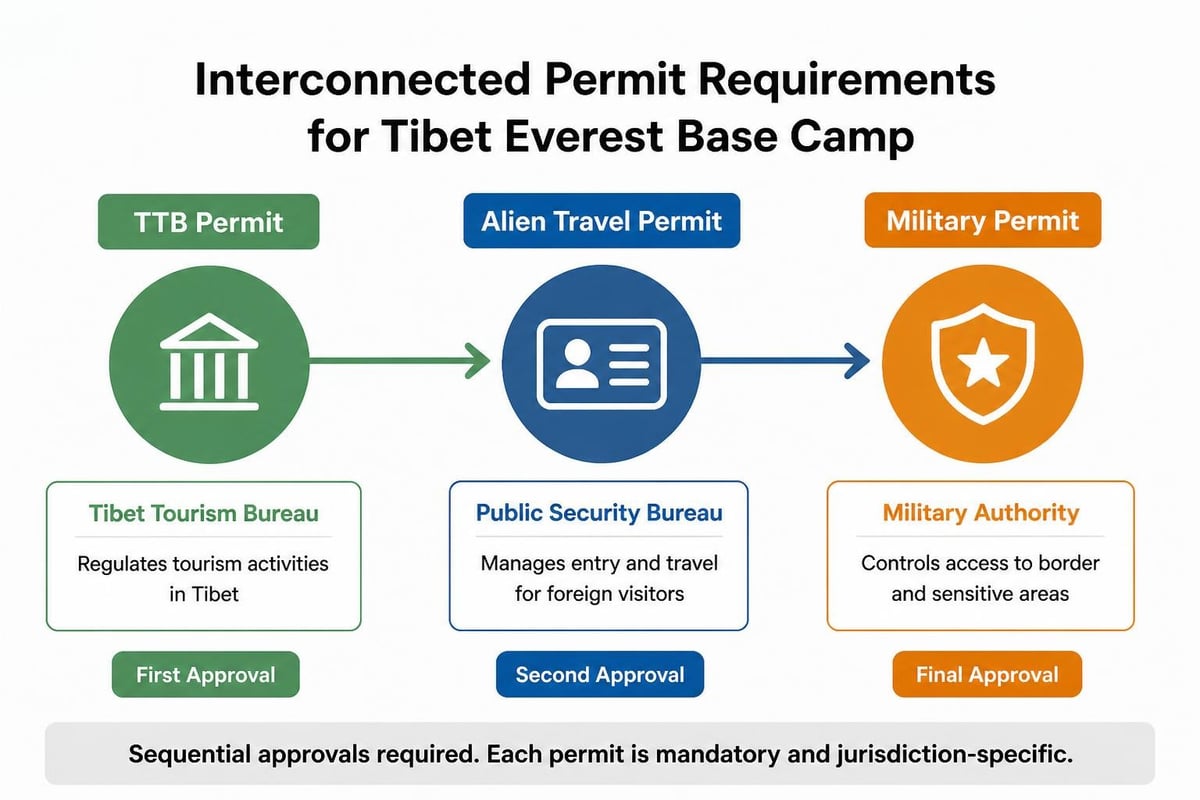
Tibet maintains strict entry controls requiring multiple permits beyond standard Chinese visas. All foreign travelers must arrange trips through registered tour operators and cannot travel independently in Tibet.
Essential permits include:
- Tibet Tourism Bureau (TTB) Permit – The fundamental document for Tibet entry
- Alien's Travel Permit – Required for areas outside Lhasa, including the Everest region
- Military Permit – Necessary for border regions near Everest Base Camp
- Foreign Affairs Permit – Sometimes required depending on nationality and route
Processing these documents typically requires 15-20 days before travel, with original passport submission necessary. Recent permit and visa procedures have become more streamlined through experienced operators who handle the bureaucratic complexity.
Acclimatization Strategies
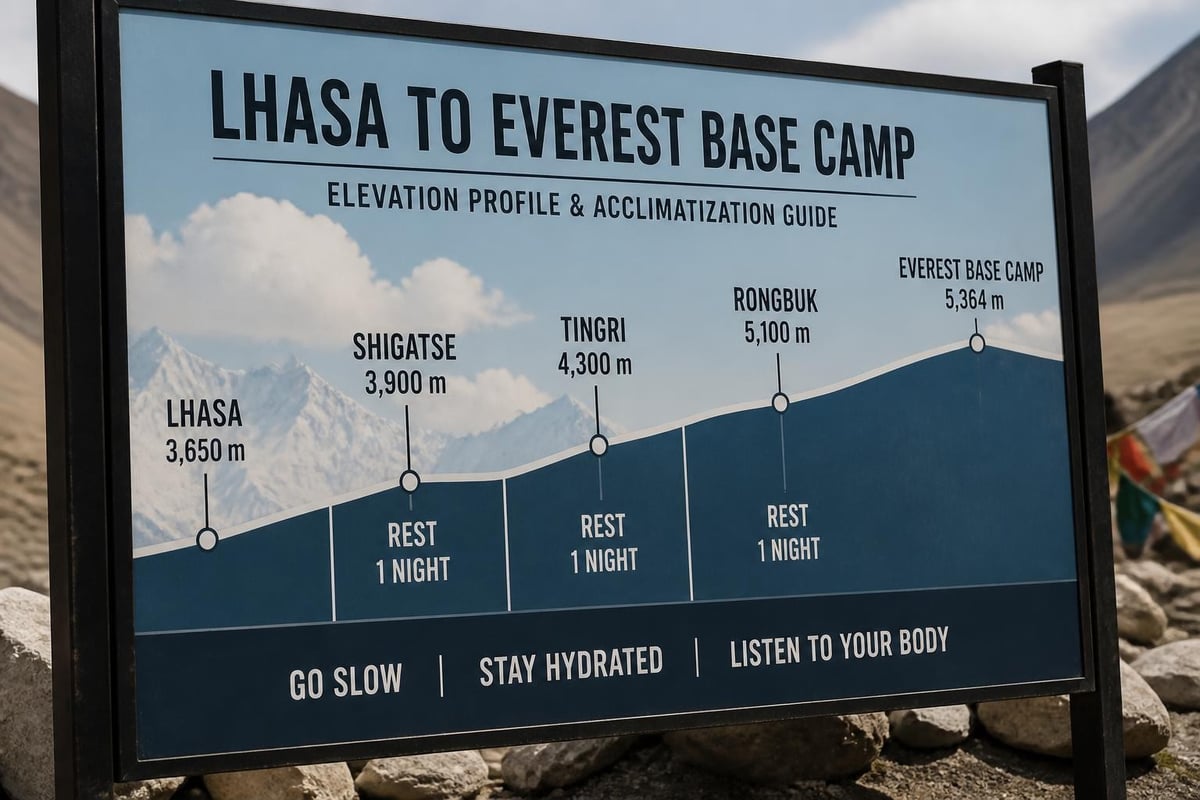
High-altitude acclimatization represents the single most critical health consideration for Tibet Everest travel. The journey begins at Lhasa's 3,650 meters and climbs to over 5,000 meters, requiring careful physiological adjustment.
Recommended acclimatization schedule:
- Days 1-3: Lhasa orientation at 3,650 meters with light activity
- Day 4: Travel to Gyantse (3,950 meters) with gradual elevation gain
- Days 5-6: Shigatse area (3,840 meters) allowing recovery from initial climb
- Day 7: Cross Gyatso La Pass but sleep lower at Tingri (4,300 meters)
- Days 8-9: Rongbuk and Everest Base Camp with option to descend for sleeping
The "climb high, sleep low" principle remains essential. Even well-acclimatized individuals should monitor for altitude sickness symptoms including headache, nausea, and unusual fatigue. Immediate descent provides the only reliable treatment for severe altitude sickness.
Physical Preparation Requirements
While the overland Tibet Everest journey doesn't involve technical climbing, the high altitude demands excellent cardiovascular fitness and mental resilience. The north face route requires less physical exertion than adventure treks to Everest Base Camp from Nepal, but altitude compensates for the easier terrain.
Preparation should include:
- Regular cardiovascular exercise building to 4-5 sessions weekly
- Hiking with weighted packs at progressively higher elevations
- Core strengthening for vehicle travel over rough terrain
- Mental preparation for basic accommodation and limited amenities
Unlike Nepal's multi-day trekking approach, much of the Tibet Everest route involves vehicle travel, making it accessible to travelers who cannot undertake extended hiking but maintain good overall fitness.
The Journey Experience
Understanding what to expect during the actual travel days helps set realistic expectations and enhances appreciation for the unique aspects of this route.
Lhasa to Shigatse: Cultural Immersion
The journey begins with several days exploring Lhasa's UNESCO World Heritage sites. Potala Palace, former winter residence of the Dalai Lamas, towers over the city as a 13-story architectural marvel containing over 1,000 rooms. Jokhang Temple anchors Lhasa's spiritual life, drawing pilgrims who prostrate themselves along the Barkhor circuit.
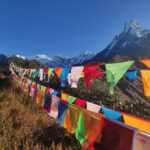
The drive from Lhasa to Shigatse crosses the stunning Yamdrok Tso, a turquoise sacred lake sprawling across 638 square kilometers. This route reveals how Tibetan communities integrate spiritual practice into daily rhythms, with prayer flags marking mountain passes and small shrines dotting the roadside.
Shigatse to Everest Base Camp: Ascending to the Roof of the World
From Shigatse, the landscape becomes increasingly stark and magnificent. The road climbs through agricultural valleys giving way to high-altitude desert where nomadic herders tend yak herds against backdrops of snow-covered peaks.
The approach to Everest involves crossing the dramatic Gyatso La Pass, where on clear days the entire Himalayan chain stretches across the horizon. Four of the world's fourteen 8,000-meter peaks become visible simultaneously, an overwhelming display of geological force.
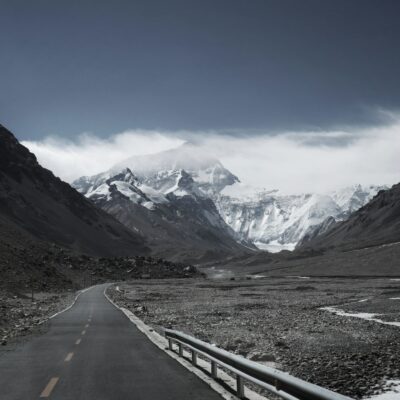
Those traveling on the Lhasa to Everest Base Camp route experience gradual revelation as the pyramid of Everest's north face grows larger with each passing hour. The final approach through Rongbuk Valley presents the mountain in its most austere and powerful aspect, unobstructed by neighboring peaks.
Experiencing Everest Base Camp
Tibet Everest Base Camp differs markedly from its Nepali counterpart. The northern base camp feels more remote and pristine, with fewer travelers and less commercial development. Visitors can drive within 8 kilometers of the base camp itself, with the final approach completed on foot or by eco-friendly shuttle.
The north face presents Everest in a particularly dramatic light, its massive pyramid rising directly from the Tibetan Plateau without the screening effect of foothills. This perspective reveals the mountain's full vertical relief, creating an almost overwhelming sense of scale.
Base camp activities and highlights:
- Sunrise and sunset photography sessions capturing the north face
- Visits to Rongbuk Monastery for evening prayer ceremonies
- Short hikes to viewpoints above base camp for panoramic perspectives
- Stargazing in the thin, clear high-altitude air
- Cultural exchanges with seasonal residents and monks
Responsible Travel Practices
The Tibet Everest region faces mounting environmental pressures from tourism growth, climate change, and development. Conscious travelers can significantly reduce their impact while supporting local communities.
Environmental Impact Mitigation
Recent years have seen growing concerns about overcrowding on Mount Everest's climbing routes, though the Tibet Everest approach typically experiences less pressure than the southern side. Nevertheless, every visitor contributes to the cumulative impact on this fragile ecosystem.
| Impact Area | Challenge | Mitigation Strategy |
|---|---|---|
| Waste Management | Limited disposal infrastructure | Pack out all waste, use biodegradable products |
| Water Resources | Scarce water at high altitudes | Minimize water use, avoid contamination |
| Wildlife Disturbance | Sensitive high-altitude species | Maintain distance, avoid flash photography |
| Cultural Sites | Wear from visitor traffic | Follow monastery protocols, respect sacred spaces |
Choosing tour operators committed to Leave No Trace principles makes a measurable difference. Companies employing local guides and staff, using locally-owned guesthouses, and implementing waste reduction protocols distribute tourism benefits more equitably while minimizing environmental harm.
Supporting Local Communities
Tourism to Tibet Everest can either extract value from local communities or strengthen their economic resilience and cultural continuity. The distinction lies in how tours are structured and operated.
Community-centered tourism approaches:
- Employing local Tibetan guides who share cultural knowledge authentically
- Using family-run guesthouses and restaurants rather than chain hotels
- Purchasing crafts directly from artisans instead of souvenir shops
- Engaging with communities respectfully rather than treating them as photo subjects
- Compensating locals fairly for photography opportunities
Small group tours inherently reduce environmental impact while allowing deeper cultural engagement. Groups of 8-12 travelers permit meaningful conversations with guides and locals impossible in larger coach tours.
Navigating Cultural Sensitivity
Tibet's complex political situation requires travelers to approach cultural interactions with awareness and respect. Tibetan communities have experienced significant pressures on their traditional ways of life, making sensitive engagement particularly important.
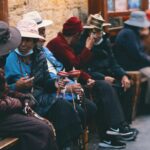
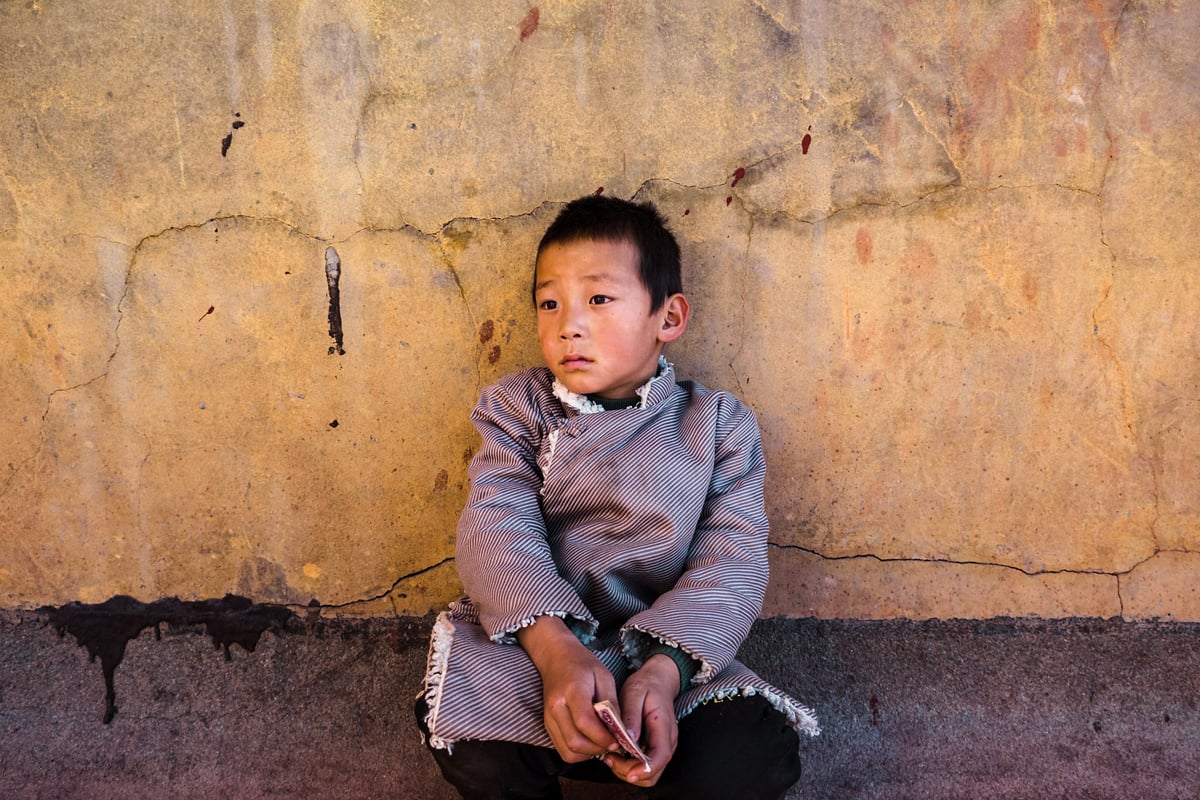
Photography etiquette matters enormously. Always request permission before photographing individuals, particularly monks and elderly people. Many Tibetans welcome respectful photography but appreciate being asked. Religious ceremonies and rituals should only be photographed if explicitly permitted.
Dress modestly when visiting monasteries and sacred sites. Remove hats, avoid shorts, and speak quietly in temple areas. Clockwise circumambulation around religious sites follows Tibetan Buddhist custom. These small gestures demonstrate respect for the cultural context that makes the Tibet Everest journey meaningful beyond simple sightseeing.
Comparing Tibet and Nepal Routes
Understanding the differences between approaching Everest from Tibet versus Nepal helps travelers choose the route best aligned with their interests and capabilities.
Logistical Differences
The Tibet Everest approach is primarily vehicle-based, covering distance through driving rather than multi-day trekking. This makes the journey accessible to travelers who might struggle with the Nepal Everest Base Camp trek, which requires 12-14 days of hiking at altitude.
Accessibility comparison:
- Tibet Route: 5-7 days total, mostly vehicle travel, moderate fitness required
- Nepal Route: 12-14 days trekking, high fitness required, more physically demanding
- Tibet Altitude: Reaches 5,200+ meters immediately, aggressive acclimatization
- Nepal Altitude: Gradual ascent from 2,800 meters allows easier acclimatization
Permit complexity heavily favors Nepal for independent travelers, as Tibet requires organized tours while Nepal permits solo trekking. However, the organized nature of Tibet tours provides structure appreciated by travelers preferring logistical support.
Cultural and Environmental Distinctions
The cultural experiences differ substantially between routes. Tibet Everest journeys immerse travelers in Tibetan Buddhist culture across the high plateau, visiting monasteries and communities whose lifestyles remain closely tied to traditional practices. Nepal’s approach passes through Sherpa villages with their own rich Buddhist traditions but in a more developed trekking tourism context.
Environmental settings contrast sharply. Tibet's north face reveals Everest rising from barren high-altitude desert, creating stark, austere landscapes. Nepal's southern approach winds through rhododendron forests and alpine valleys before reaching the Khumbu Glacier's dramatic icefall region.
Viewing Perspectives
The north face visible from Tibet Everest Base Camp presents a dramatically different mountain profile than the southern Khumbu face. The Tibetan side offers the classic pyramid shape seen in iconic photographs, with the northeast ridge clearly visible. This perspective allows clearer understanding of historical climbing routes and the mountain's overall architecture.
Weather patterns also affect viewing opportunities differently. The Tibetan Plateau's rain shadow effect means clearer conditions during summer months when Nepal's monsoon obscures southern views. However, winter brings extreme cold to Tibet while Nepal enjoys stable, clear conditions.
Safety Considerations and Challenges
Tibet Everest travel involves inherent risks that require serious preparation and ongoing vigilance. Understanding potential challenges allows travelers to prepare appropriately and make informed decisions.
Altitude-Related Health Risks
Acute mountain sickness (AMS) affects a significant percentage of travelers ascending above 3,500 meters, with risks increasing substantially above 5,000 meters. The rapid altitude gain from Lhasa to Tibet Everest Base Camp creates elevated AMS risk compared to gradual trekking approaches.
Warning signs requiring immediate attention:
- Severe headache unrelieved by standard medication
- Persistent vomiting or loss of appetite
- Confusion or difficulty with coordination
- Shortness of breath while resting
- Fluid accumulation in lungs (crackling breathing sounds)
High-altitude cerebral edema (HACE) and high-altitude pulmonary edema (HAPE) represent life-threatening conditions requiring immediate descent. Quality tour operators maintain oxygen supplies and evacuation protocols, but the remote location means medical facilities are hours away at minimum.
Travelers with heart conditions, respiratory issues, or other significant health concerns should consult altitude medicine specialists before attempting high-altitude travel.
Weather and Road Conditions
Tibet's extreme climate creates unpredictable travel conditions. Severe snowstorms can trap travelers even during normally stable seasons, particularly at high passes. Road washouts during summer rains occasionally necessitate route changes or delays.
The infrastructure along the Tibet Everest route varies considerably. While the main highway receives regular maintenance, sections remain unpaved and subject to deterioration. Four-wheel-drive vehicles handle most conditions, but landslides or snow can close routes temporarily.
Political and Access Restrictions
Tibet occasionally closes to foreign tourists with little advance notice due to political sensitivities or significant anniversaries. These closures typically last days to weeks but can disrupt travel plans. Working with experienced operators familiar with regional dynamics helps navigate these uncertainties.
Border tensions between China and neighboring countries periodically affect permit issuance and access to border regions including Everest Base Camp. Travelers should maintain flexible schedules and understand that even confirmed permits may face last-minute complications beyond operators' control.
Photography and Documentation
The Tibet Everest route offers extraordinary photographic opportunities combining natural grandeur with cultural richness. Proper equipment and techniques maximize the potential of this visually stunning journey.
Equipment Recommendations
High-altitude photography presents specific technical challenges. Thin atmosphere increases UV radiation, requiring protective filters. Temperature extremes affect battery performance and can damage sensitive electronics.
Essential photography gear:
- Wide-angle lens (16-35mm) for landscape and architectural photography
- Telephoto zoom (70-200mm) for distant mountain details and portraits
- UV and polarizing filters to manage harsh high-altitude light
- Multiple batteries kept warm against body when not in use
- Sturdy tripod for low-light monastery interiors and star photography
- Protective camera bag sealed against dust and temperature extremes
The stark lighting conditions at high altitude create high contrast between bright snow and shadowed valleys. Understanding exposure compensation and bracketing techniques helps capture the full dynamic range of Tibet Everest landscapes.
Optimal Photography Locations
Specific locations along the Tibet Everest route offer exceptional photographic opportunities worth planning around:
- Yamdrok Tso viewpoint for turquoise lake with Himalayan backdrop
- Gyatso La Pass for panoramic mountain range perspectives
- Rongbuk Monastery courtyard framing Everest through traditional architecture
- Base camp sunrise positions capturing first light on the north face
- Tibetan villages for cultural photography with permission
Dawn and dusk provide the most dramatic lighting, with alpenglow transforming Everest's north face into shades of pink and gold. Clear nights offer exceptional astrophotography opportunities with minimal light pollution and thin atmosphere revealing remarkable star density.
Ethical Documentation Practices
Photography ethics matter particularly in culturally sensitive contexts. The principle of informed consent applies universally – people deserve agency over how their images are captured and used.
When photographing Tibetan individuals, consider offering to share images through email or social media rather than simply extracting their likeness. Many monks and pilgrims welcome respectful documentation but appreciate collaborative rather than extractive approaches.
Interior photography in monasteries often requires permission and sometimes fees. These resources support monastery maintenance and honor the sacred nature of religious spaces. Flash photography typically damages ancient pigments and disturbs ceremonial activities, making natural light photography both more respectful and technically superior.
The Tibet Everest journey represents one of the world's most profound travel experiences, combining natural magnificence with deep cultural immersion across the Tibetan Plateau. Approaching this route with environmental consciousness, cultural sensitivity, and thorough preparation transforms the journey from simple tourism into meaningful engagement with both landscape and community. Elevated Trips specializes in small-group, culturally immersive tours that benefit local Tibetan communities while minimizing environmental impact, offering expert guidance through the complex logistics and rich experiences of the Tibet Everest route. Explore how our commitment to sustainable, authentic travel can transform your Himalayan adventure into a journey of genuine connection and discovery.